
LPG Tanks and Bullets

Liquefied Petroleum Gas (LPG)—a highly combustible blend composed primarily of propane and butane—is an indispensable global fuel source utilized heavily across residential, transportation, and industrial sectors. Through rigorous design and consultancy workflows, engineers ensure that to store and transport this fuel safely and efficiently, it is correctly subjected to moderate pressure or intense cooling, transforming it from a highly voluminous gas into a densely packed liquid. The specialized pressure vessels engineered exclusively to contain it are known industrially as LPG tanks and bullets.
The Physics of Liquefied Gas Storage
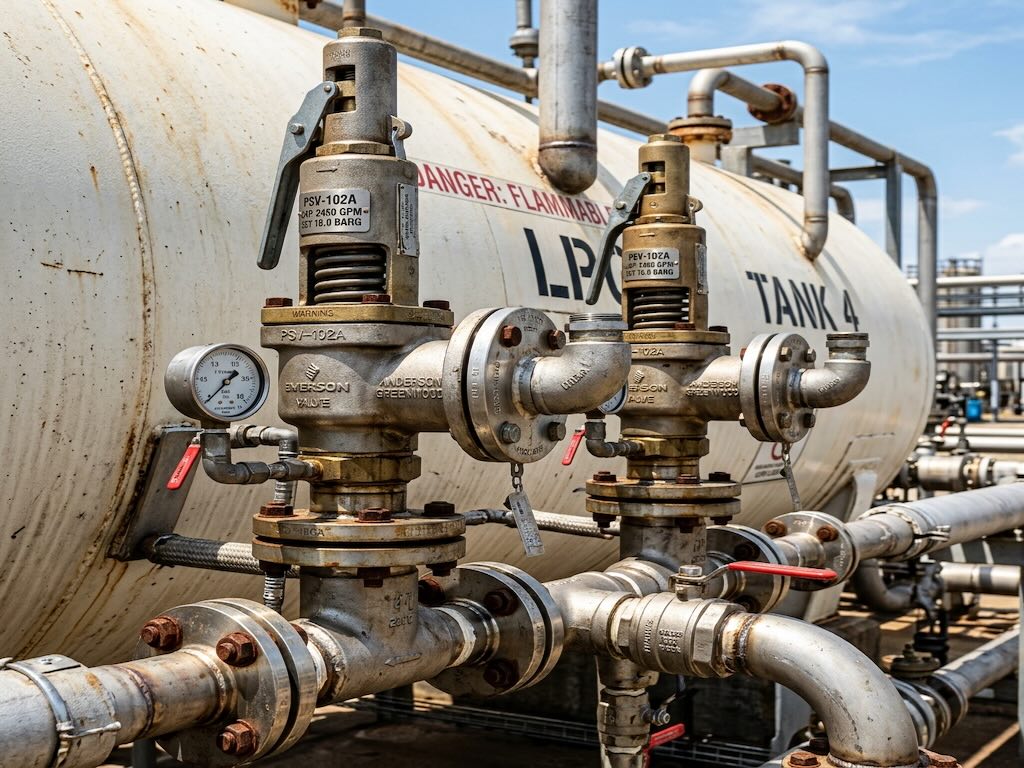
LPG possesses an expansion ratio of approximately 270:1, meaning one unit volume of liquid LPG will violently vaporize into 270 units of explosive gas if suddenly exposed to normal atmospheric pressure. Therefore, keeping it contained tightly in a liquid state is a continuous battle handled by robust static equipment design. The vessel must be precisely engineered using tools like PV Elite to maintain extremely high internal pressures without fracturing under continuous cyclic stress over decades of usage.
Types of LPG Storage Configurations
| Vessel Design | Structural Framework | Primary Advantages |
|---|---|---|
| Above-Ground Horizontal Bullets | Massive cylindrical vessels spanning horizontally, typically resting heavily upon twin concrete saddles. | Lowest fabrication cost and easiest maintenance access for visual pipeline inspections. |
| Mounded Storage Bullets | Horizontal bullets purposefully buried entirely underneath an incredibly thick layer of compacted sand and protective earth. | Imparts unmatched fireproofing, eliminates thermal expansion from direct sunlight, and guarantees extreme municipal blast safety. |
| Storage Spheres | Massive globe-shaped tanks elevated firmly on steel support columns, generally utilized for massive port terminal storage. | Provides the absolute most volume for the absolute least amount of steel surface area, optimizing structural costs for immense tank farms. |
The Threat of BLEVE
Safety engineering for LPG tanks inherently revolves around preventing a catastrophic scenario known as BLEVE (Boiling Liquid Expanding Vapor Explosion). If a tank is engulfed by an external fire, the liquid inside rapidly boils, generating astronomical internal pressures. Simultaneously, the raging fire weakens the structural steel above the liquid line. When the steel finally fails, the sudden depressurization flashes the entire liquid inventory into a gigantic explosive fireball.
Safety Integration: To mitigate BLEVE risks, all ASME-rated LPG bullets heavily integrate safety valves, pressure relief valves (PRVs), automatic emergency shutdown systems (ESD), and external deluge fire water sprinkler systems designed strictly under API 2510 safety codes.