
Fire Water Sprinkler Systems
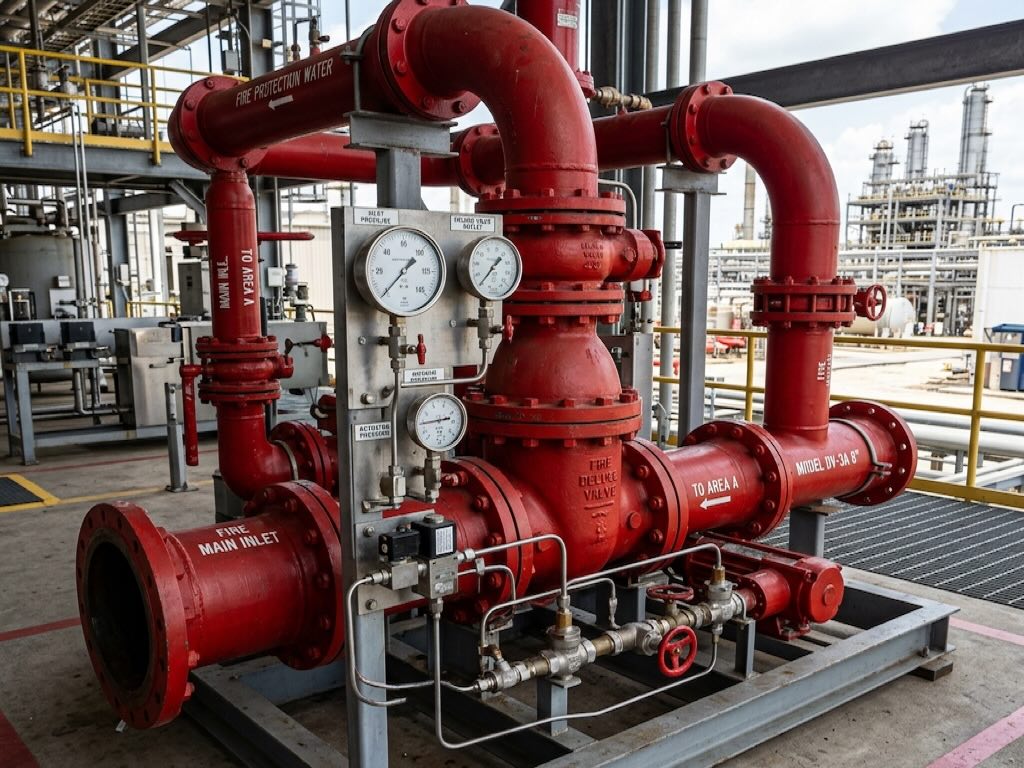
An industrial fire water sprinkler system is a complex, intricately engineered network of heavily pressurized piping, massive underground water mains, detection sensors, and overhead spray nozzles purposefully designed to detect, control, and instantly suppress catastrophic fires. Through our rigorous design and consultancy engineering, we ensure that in high-hazard industrial environments—such as petrochemical refineries, offshore oil platforms, and electrical power plants—rapid fire suppression functions flawlessly as the last critical line of defense preventing billions of dollars in damage and immense loss of life.
How Sprinkler Systems Function Mechanically
The vast majority of systems remain passively pressurized with water from a dedicated, massive storage loop. In a standard setup, each individual sprinkler head acts entirely independently, capped tightly with a heat-sensitive glass bulb or fusible metal link. When a localized fire elevates temperatures significantly (often passing 68°C or 155°F), the local bulb bursts. The water pressure instantly forces the plug out, and water violently crashes against a deflector plate, showering a highly engineered geometric spray pattern downward over the flames.
Types of Industrial Sprinkler Systems
Commercial buildings typically rely on standard “wet pipe” configurations. However, highly complex process piping facilities necessitate uniquely adapted Fire & Gas (F&G) defense methods.
| System Type | Mechanical Response Mechanism | Optimal Industrial Usage |
|---|---|---|
| Wet Pipe Systems | The piping network is constantly filled tightly with pressurized water. Bulbs break individually upon heating. | Offices, climate-controlled warehouses, moderately hazardous zones. |
| Dry Pipe Systems | The piping holds highly pressurized air or nitrogen instead of water. When a bulb breaks, the air violently escapes, triggering a main valve that floods the line with water. | Unheated environments heavily prone to catastrophic pipe freezing during severe winters. |
| Deluge Systems | All sprinkler nozzles lack bulbs entirely and remain permanently open. When a separate heat/smoke detector trips, a massive deluge valve opens, flooding the entire zone simultaneously with thousands of gallons of water. | High-hazard chemical storage tanks, LPG spheres, explosive conveyor belts. |
| Pre-Action Systems | Utilizes closed bulbs but keeps pipes deliberately dry. Requires both an active smoke detector to flood the pipes, and a shattered bulb to finally discharge water. | Command control rooms, massive data centers, environments where accidental water discharge is utterly disastrous. |
The Crucial Role of NFPA Codes
Around the global world, these critical safety networks are strictly governed by standards published heavily by the National Fire Protection Association (NFPA). Standards like NFPA 13 dictate precisely how far apart pipe brackets must be spaced, how many gallons-per-minute of water density must forcibly hit the floor, and how deeply hydraulic calculations must prove the system can supply adequate water pressure to the absolute furthest, most “hydraulically demanding” nozzle.
Note on Fire Pumps: System water pressure drops catastrophically instantly when a massive deluge valve trips. Engineers must rigorously design skid mounted packages containing colossal dedicated diesel-driven fire pumps to instantly slam hundreds of PSI back into the ring main to maintain adequate suppression spray dynamics.