
Piping Design & Stress Analysis Engineering
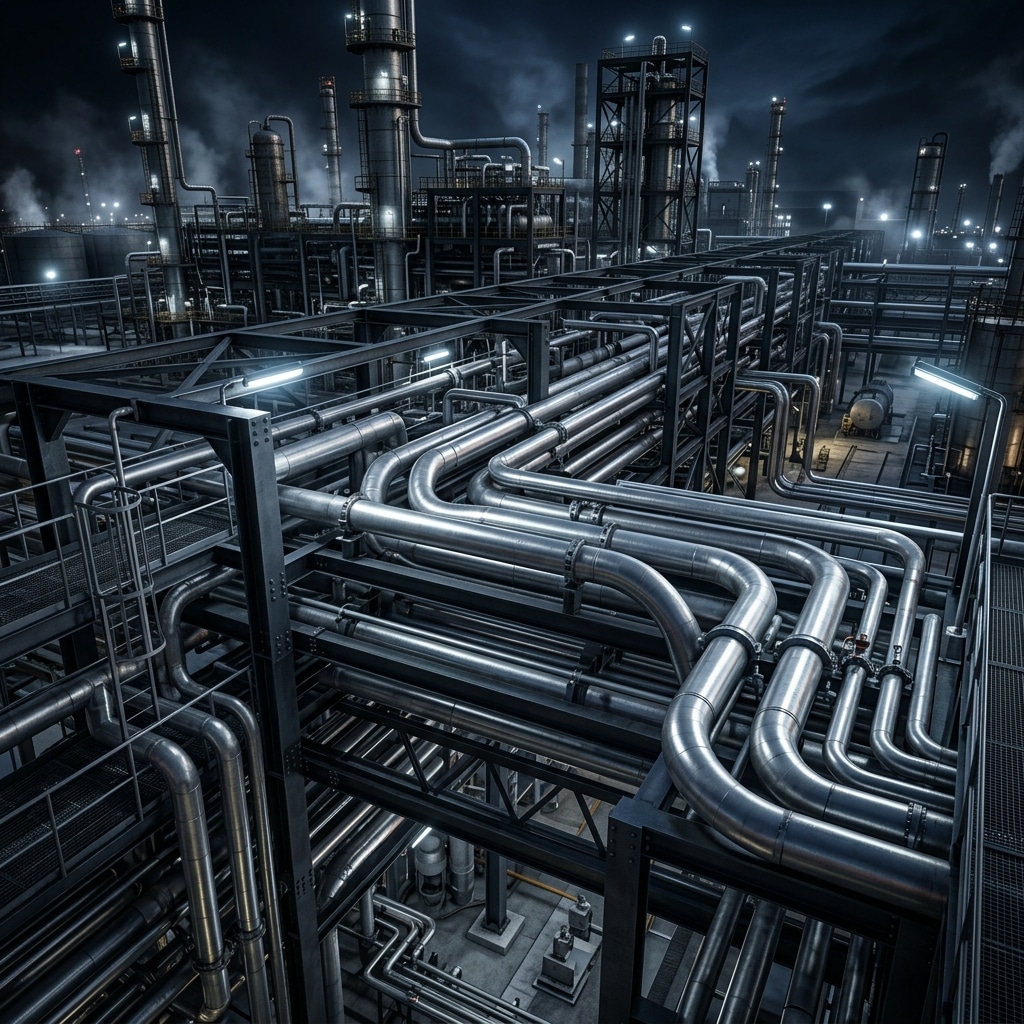
The arteries of any major industrial facility are its piping networks. Our engineering design and consultancy services provide comprehensive piping layout routing and advanced piping stress analysis to guarantee safe, continuous operation. We ensure your pipes can handle extreme thermal expansion, intense vibration, and heavy fluid loads without failing or straining connected static equipment connections.
What is Piping Stress Analysis?
Piping stress analysis is the engineering methodology used to evaluate the mechanical behavior of piping systems under various loading conditions. Utilizing tools like CAESAR II, engineers calculate thermal expansion, dead weight, and pressure loads to ensure the physical limits of the pipes, supports, and connected machinery strictly comply with ASME B31 codes.
A perfectly simulated thermodynamic model developed during our process design phase is useless if the physical pipes burst under pressure. We tackle everything from conceptual pipe routing to ultra-detailed load calculations for complex Petrochemical and Oil & Gas installations.
Complete Piping Engineering Scope
We combine highly advanced 3D spatial routing with rigorous stress and flexibility calculations to deliver a complete piping package.
- Piping Layout & Routing: Delivering conceptual to detailed isometric drawings for clash-free installation.
- Industrial Pipe Sizing: Calculating optimal pipe diameters based on required flow rates and acceptable pressure drops.
- Stress & Flexibility Analysis: Simulating thermal expansion, vibration, and catastrophic load scenarios using CAESAR II.
- Support Design: Engineering custom spring hangers, anchors, and base supports to manage extreme mechanical loads.
- Material Selection: Specifying exact metallurgical requirements based on temperature, pressure, and fluid corrosivity.
Industry Standard Software Stack
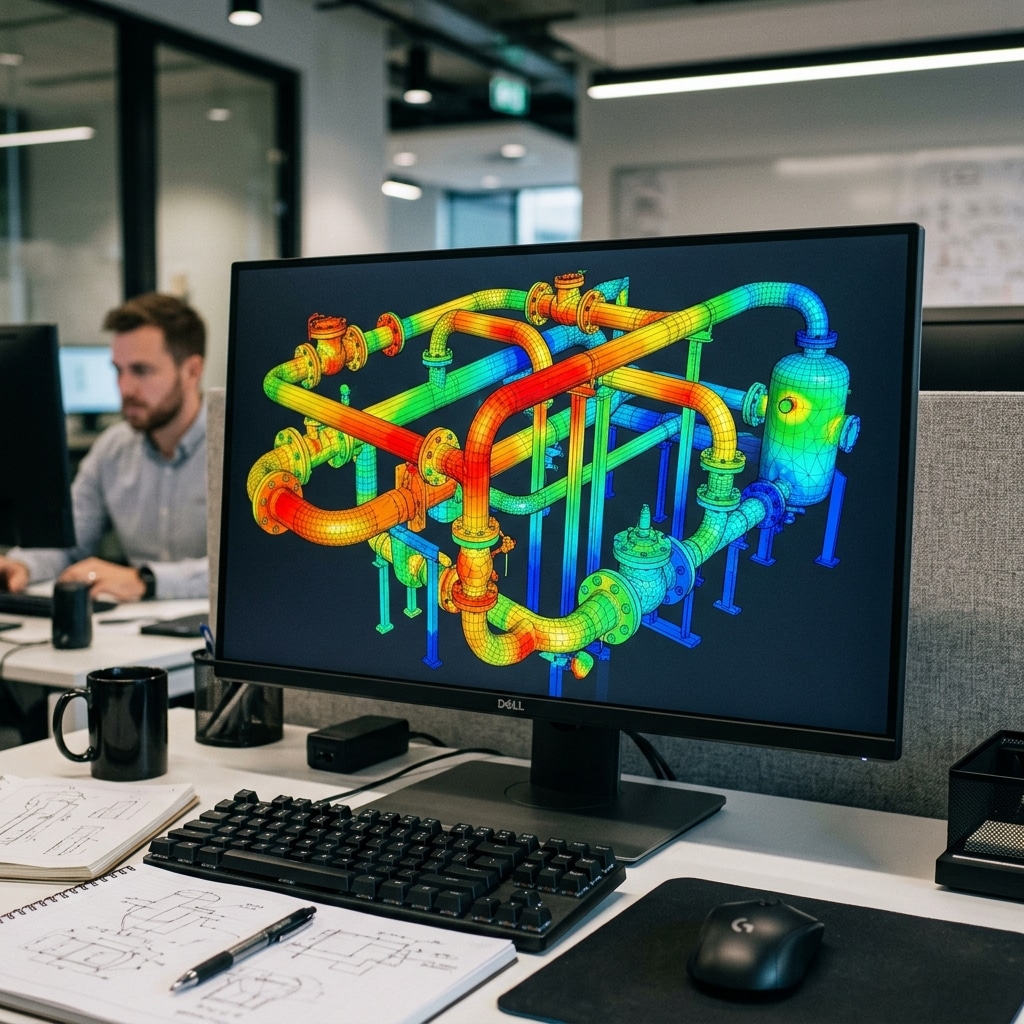
Modern piping engineering requires flawless accuracy. We utilize the global standards in industrial CAD and FEA (Finite Element Analysis) to validate every connection.
| Software Suite | Primary Application | Value for Industrial Clients |
|---|---|---|
| AutoCAD Plant 3D | 3D Layout & Routing | Generates clash-free models and precise isometric drawings for fabrication. |
| CAESAR II | Pipe Stress Analysis | Prevents catastrophic thermal expansion failures and ensures code compliance. |
| ANSYS | Finite Element Analysis | Resolves highly specialized vibration or localized critical stress points. |
| In-House Excel | Sizing & Friction Verification | Provides rapid pressure drop baseline references before heavy 3D modeling. |
Engineering Tip: Never finalize equipment nozzle designs on pressure vessels before completing the pipe stress analysis. Excessive piping loads are the #1 cause of nozzle shear failures on heavy static equipment.
How to Execute a Pipe Stress Analysis Process
Our engineers use an uncompromising step-by-step approach to guarantee that your piping configuration will not damage connected equipment.
- Data Gathering: Collect precise temperatures, pressures, and material specifications from the process design P&IDs.
- 3D Modeling (AutoCAD Plant 3D): Model the physical layout of the pipes, confirming spatial dimensions and avoiding structural clashes.
- Load Application (CAESAR II): Apply weight (pipes, fluid, insulation) and thermal loads to the simulated model.
- Support Optimization: Iteratively place specific physical supports (guides, line stops, spring hangers) to mitigate excessive movement.
- Nozzle Load Verification: Ensure the final sustained stress levels at equipment connection points fall safely below allowable limits.
- Compliance Report: Generate the finalized ASME B31 compliance documentation ready for fabrication.
Frequently Asked Questions
-
What is CAESAR II used for?
CAESAR II is the globally recognized industry standard software for evaluating pipe stress. It calculates the physical responses of a piping system to weight, pressure, and thermal loads, ensuring the entire system meets international safety codes.
-
What is ASME B31 compliance?
ASME B31 is a series of codes established by the American Society of Mechanical Engineers governing the design, construction, and inspection of pressure piping systems. Compliance is legally and technically mandatory in most heavy industrial sectors.
-
Why is thermal expansion critical in piping?
Thermal expansion is critical because metal pipes grow significantly when subjected to high-temperature fluids. If this physical expansion is not managed through flexibility routing or engineered supports, it will tear the pipe apart or destroy connected machinery.
-
How is pipe sizing determined?
Pipe sizing is determined by rigorously balancing the required fluid flow rate against the acceptable pressure drop and velocity limits. This ensures efficient pumping while minimizing erosion, vibration, and excess material costs.
Secure Your Piping Infrastructure
From routing major transfer lines to designing intricate, high-vibration pump connections, our team ensures your piping systems are engineered for total safety and efficiency. We deliver complete, code-compliant isometric packages ready for immediate fabrication.