
Air Coolers and Condensers
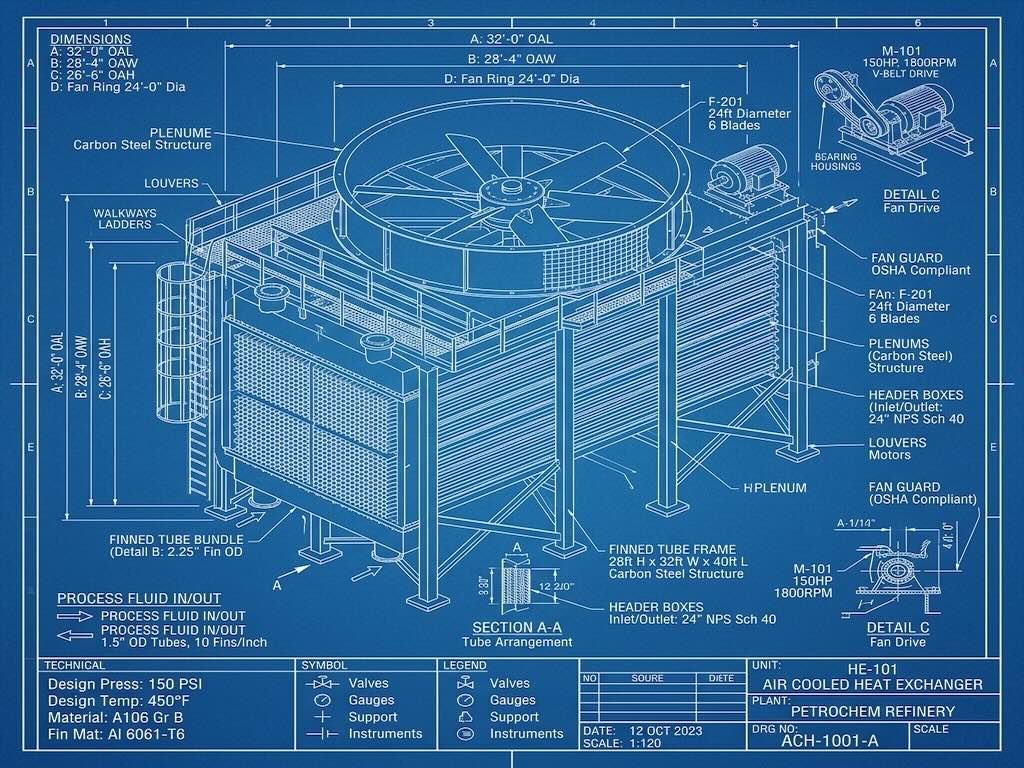
Air coolers (also known as air-cooled heat exchangers or fin-fan coolers) and condensers are critical pieces of industrial equipment used extensively in oil refineries, petrochemical plants, and power generation facilities. As part of comprehensive design and consultancy scopes, their primary function is carefully engineered to reject excess thermal energy from process fluids directly to the ambient atmosphere, utilizing air as the cooling medium instead of water.
How Air-Cooled Heat Exchangers Work
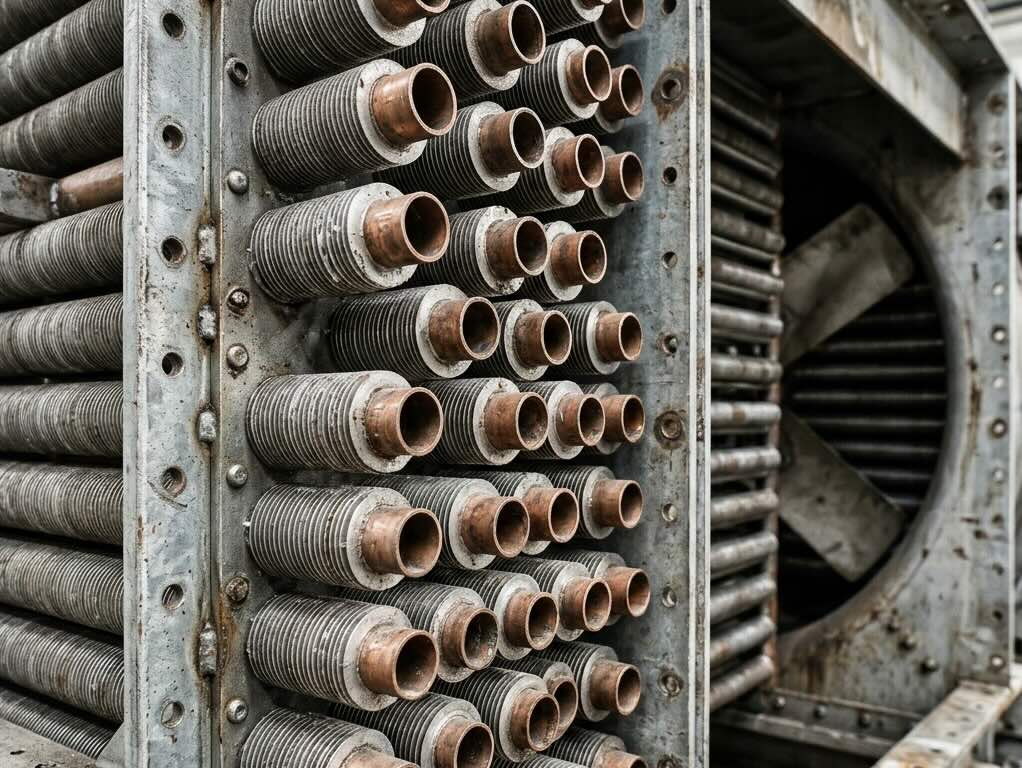
In an air-cooled heat exchanger, hot process fluid flows through a bank of finned tubes. Massive axial fans force or induce ambient air across the exterior of these tubes. As the cooler air washes over the massive surface area of the fins, heat transfers from the hot liquid inside the tube to the passing air via convection. In the case of an air condenser, this process strips away enough heat to convert a vapor stream back into a liquid state.
Did you know? Finned tubes are essential because air has a relatively low thermal conductivity compared to liquids. Attaching fins to the tubes drastically increases the external surface area, allowing high volumes of heat transfer even with lower overarching thermal efficiency.
Forced Draft vs. Induced Draft Configurations
Industrial air coolers are generally engineered in two primary mechanical configurations regarding how the air interacts with the tube bundle:
- Forced Draft Air Coolers: In a forced draft layout, the fans are positioned beneath the tube bundle and push (force) air upward through the fins. This design places the mechanical fan components in the cooler, ambient air stream, which increases fan life and simplifies physical maintenance.
- Induced Draft Air Coolers: Here, the fans are mounted securely above the tube bundle. They pull (induce) air upwards through the tubes. This results in better, more even air distribution across the cooling surface and drastically mitigates the risk of hot-air recirculation, though the fan assembly must withstand the elevated temperatures of the exhausted hot air.
Advantages of Using Air over Water Cooling
| Operational Factor | Benefit of Air Coolers |
|---|---|
| Resource Conservation | Requires literally zero coolant water, making them indispensable in arid, desert, or remote environments. |
| Environmental Impact | Eliminates thermal pollution into local water bodies and negates the need for environmentally hazardous chemical water treatments. |
| Operational Cost | Removes the ongoing infrastructure and electrical demands associated with maintaining massive cooling tower pumps and water filtration ecosystems. |
Proper integration of these systems relies heavily on advanced process simulation to ensure the expected ambient temperatures are factored correctly into process efficiency.
Design and Manufacturing Standards (API 661)
The global benchmark for designing these units is API Standard 661 (Air-Cooled Heat Exchangers for General Refinery Service). This standard dictates strict guidelines regarding vibration thresholds, acoustic noise limitations, header box design, and structural wind resistance to ensure equipment longevity and safety in volatile petrochemical environments.