ANSYS in Industrial Engineering: Structural, Thermal & FEA Simulation
When standard code calculations reach their limits — complex geometries, extreme loading combinations, fatigue life assessments — engineers turn to the world’s most powerful simulation platform. ANSYS is the comprehensive finite element analysis (FEA) and multi-physics simulation suite that our team deploys for the most demanding structural and thermal engineering problems, operating at the advanced end of our engineering design and consultancy capabilities. Where specialized tools like Nozzle Pro solve specific nozzle problems, ANSYS is the platform that solves everything else.
What is ANSYS Used for in Industrial Engineering?
ANSYS (developed by Ansys Inc.) is the world’s leading multi-physics simulation platform, providing engineers with structural FEA, computational fluid dynamics (CFD), thermal analysis, electromagnetics, and coupled multi-physics simulations within a single integrated environment. In the oil, gas, and petrochemical industry, ANSYS is deployed when standard code-based design methods are insufficient to assess complex stress states, fatigue life, or failure modes.
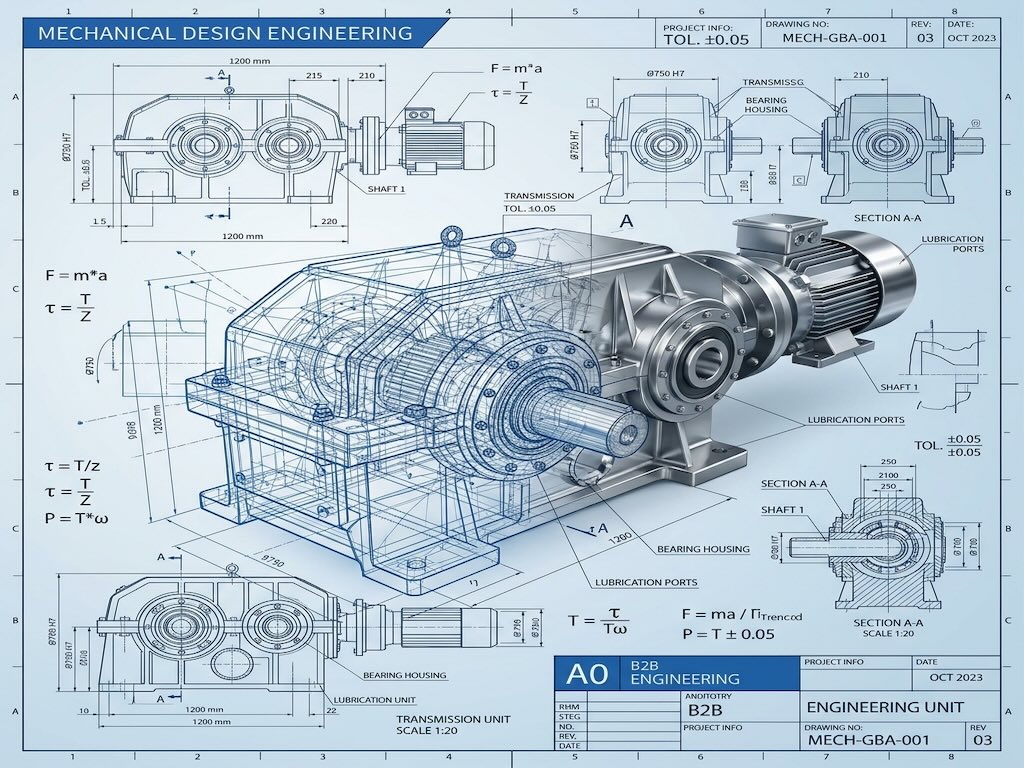
Unlike dedicated tools such as PV Elite — which applies predefined ASME rules to standard geometries — ANSYS imposes no geometric restrictions. It can model any shape, any loading scenario, and any material behavior, making it the ultimate engineering safety net for non-standard configurations where lives depend on the accuracy of the analysis.
Core ANSYS Capabilities in Our Engineering Work
We use ANSYS across multiple specialized problem types in our static equipment and piping engineering engagements where standard analytical tools are insufficient.
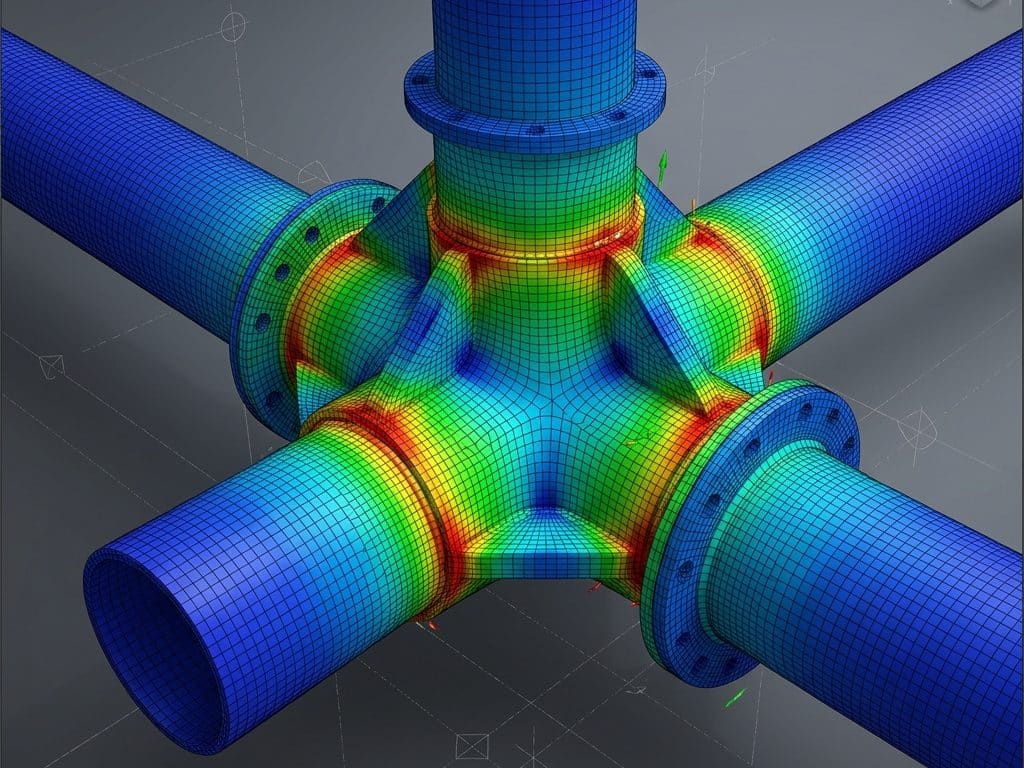
- Static Structural FEA: Full 3D solid element stress analysis of pressure vessel components, lifting attachments, and complex structural connections under combined loading.
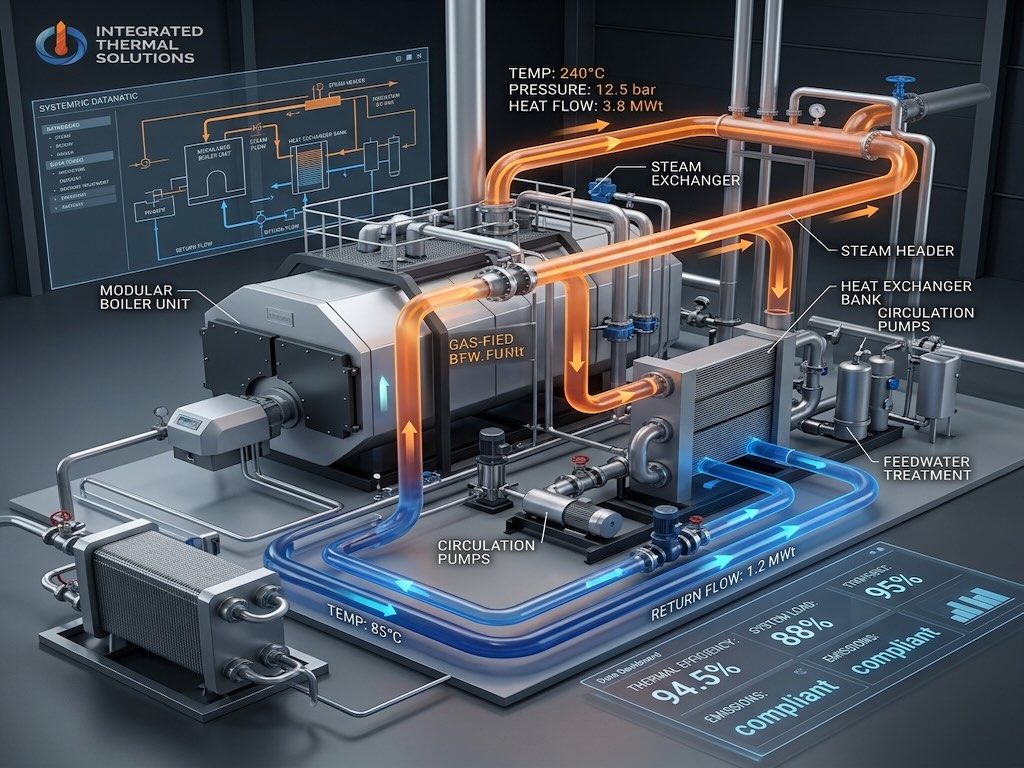
- Thermal Analysis: Steady-state and transient heat transfer modeling for equipment with steep thermal gradients, jacketed vessels, and fired heater components.
- Fatigue Life Assessment: High-cycle and low-cycle fatigue analysis per ASME Div 2 Annex 3F for pressure-cycled equipment in compressor stations and reactors.
- Buckling Analysis: Linear and non-linear buckling evaluation for tall towers, vacuum vessels, and thin-shelled structures under external pressure.
- Non-Linear Material Behavior: Elastic-plastic analysis for pressure vessel components that experience localized yielding without requiring full redesign.
ANSYS vs. Standard Code Calculations: When to Use Each
| Engineering Scenario | Standard Code Calculation | ANSYS FEA Required |
|---|---|---|
| Standard shell thickness | ✔ PV Elite handles this per ASME Div 1 | Not required |
| Complex lifting lug under combined loads | Simplified hand method — high uncertainty | ✔ Full 3D stress assessment mandatory |
| Thermal shock — rapid temperature change | Not addressable by standard codes | ✔ Transient thermal + structural coupling required |
| Tall tower buckling under wind | Code formula — conservative | ✔ Non-linear buckling analysis for optimized design |
| Fatigue — 10,000+ pressure cycles | ASME Div 2 screening curves only | ✔ Full FEA fatigue life calculation needed |
Engineering Tip: ANSYS results are only as reliable as the mesh quality, boundary conditions, and material data entered by the analyst. A poor ANSYS model gives dangerously misleading results. Always verify that your FEA engineer understands both the software and the underlying physics of the problem.
How ANSYS Integrates Into Our Engineering Workflow
ANSYS is deployed at the advanced analysis stage of a project — after standard design tools have defined the primary geometry, and a specific non-standard challenge has been identified that requires rigorous FEA validation.
- Geometry imported from SolidWorks or PV Elite — the established 3D model geometry is imported directly into ANSYS Mechanical, eliminating re-modeling time.
- Material properties assigned — temperature-dependent mechanical properties (Young’s modulus, yield strength) entered per the applicable material standard.
- Mesh generated and refined — mesh density increased in high-stress zones (welds, fillets, nozzle junctions) to capture accurate stress gradients.
- Loads and boundary conditions applied — pressure, thermal loads, gravity, and external piping loads applied at their correct physical locations.
- Solution converged and results evaluated — stress results categorized per ASME stress linearization methodology and compared to code allowables.
- Engineering report issued — full FEA documentation with mesh images, load cases, result plots, and code comparison tables submitted as part of the equipment design file.
Frequently Asked Questions
What is ANSYS Mechanical used for?
ANSYS Mechanical is the structural and thermal FEA module of the ANSYS platform, used to calculate stresses, deformations, natural frequencies, and heat transfer distributions in complex industrial components. In the pressure equipment industry, it is the primary tool for design-by-analysis assessments per ASME Section VIII Division 2.
What is the difference between ANSYS and Nozzle Pro?
Nozzle Pro is a purpose-built tool specifically for pressure vessel nozzle load evaluation — fast, pre-configured for ASME compliance, and suitable for standard nozzle geometries. ANSYS is a general-purpose multi-physics FEA platform capable of solving any structural, thermal, or fatigue problem across any geometry — but requires significantly more engineering setup time and FEA expertise.
Is ANSYS accepted by classification bodies?
Yes. ANSYS FEA results are widely accepted by classification societies (DNV, Bureau Veritas, Lloyd’s Register), regulatory bodies, and Authorized Inspection Agencies (AIAs) for pressure vessel design-by-analysis submittals, provided the analysis is performed to recognized FEA best practice standards.
What industries use ANSYS simulation?
ANSYS is used across aerospace, automotive, oil & gas, nuclear, offshore, power generation, and pharmaceutical industries. In the process industry specifically, it is used for pressure vessel design-by-analysis, rotating equipment structural evaluation, pipeline integrity assessment, and fired heater thermal modeling.
Advanced FEA Engineering for Complex Problems
When your equipment design exceeds what standard codes can safely evaluate, ANSYS provides the mathematical certainty needed to proceed with confidence. Our engineering team has extensive experience delivering production-quality ANSYS FEA reports accepted by international inspection bodies. Explore our full range of static equipment engineering services to understand where ANSYS fits in our complete mechanical analysis offering.