Static Equipment & Structural Engineering: Designing for Integrity & Compliance
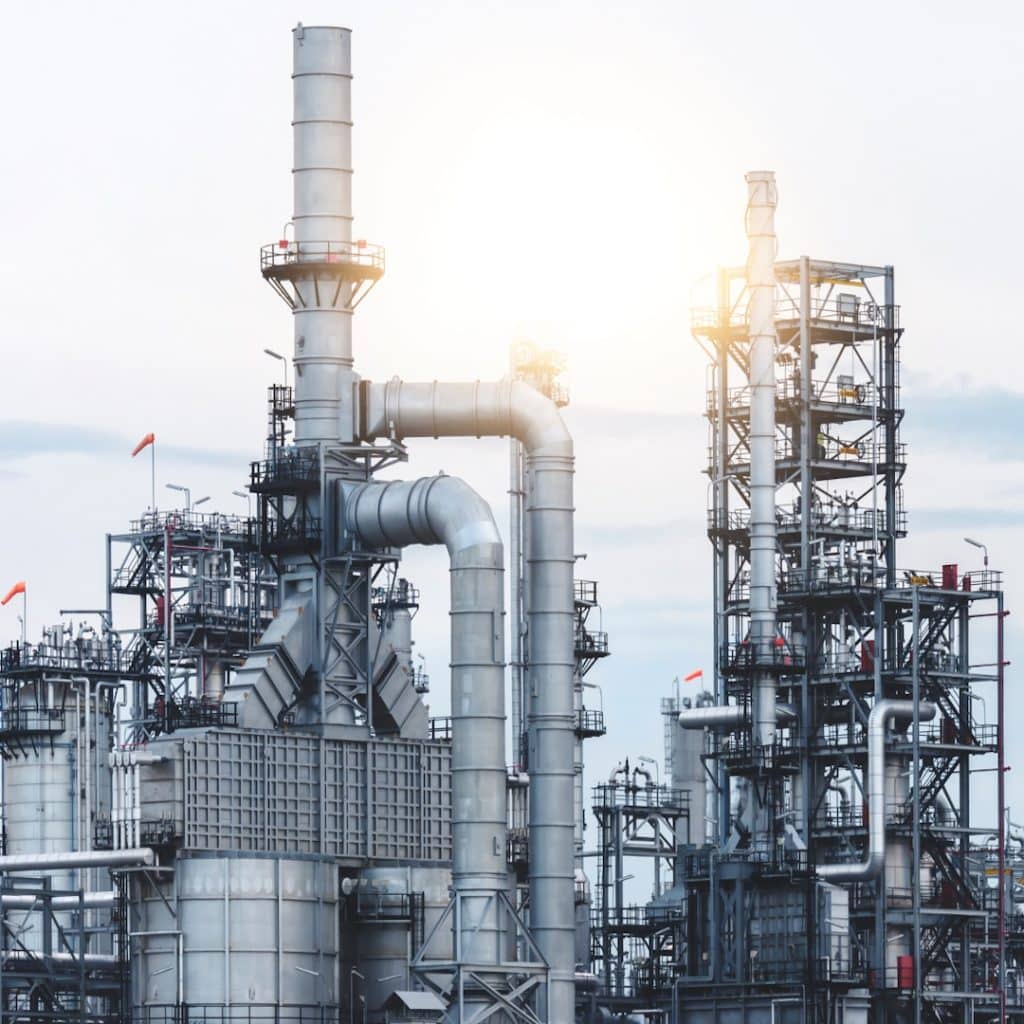
In the Oil & Gas industry, “Static Equipment” tells only half the story. While these assets do not move, they are under constant, immense stress. Extreme pressures, cryogenic temperatures, corrosive fluids, and seismic event risks mean that Static Equipment & Structural Engineering is the discipline of pure resilience.
We deliver comprehensive engineered solutions that ensure the structural integrity, long-term stability, and unconditional safety of your critical infrastructure. Utilizing sophisticated analytical software like PV Elite, ANSYS, and Nozzle Pro, our engineering goes beyond simple code compliance to rigorous performance optimization.
“Engineering integrity is not about making things efficient when everything goes right. It represents the assurance that the system will hold when everything goes wrong. Our data-driven analysis ensures that safety factors are never guessed—they are calculated.”
1. Complete Static Equipment Design
Static equipment—pressure vessels, reactors, and columns—forms the backbone of any processing plant. Design failure here is catastrophic. We provide end-to-end design services compliant with global standards such as ASME Section VIII Div 1 & 2, PD 5500, and EN 13445.
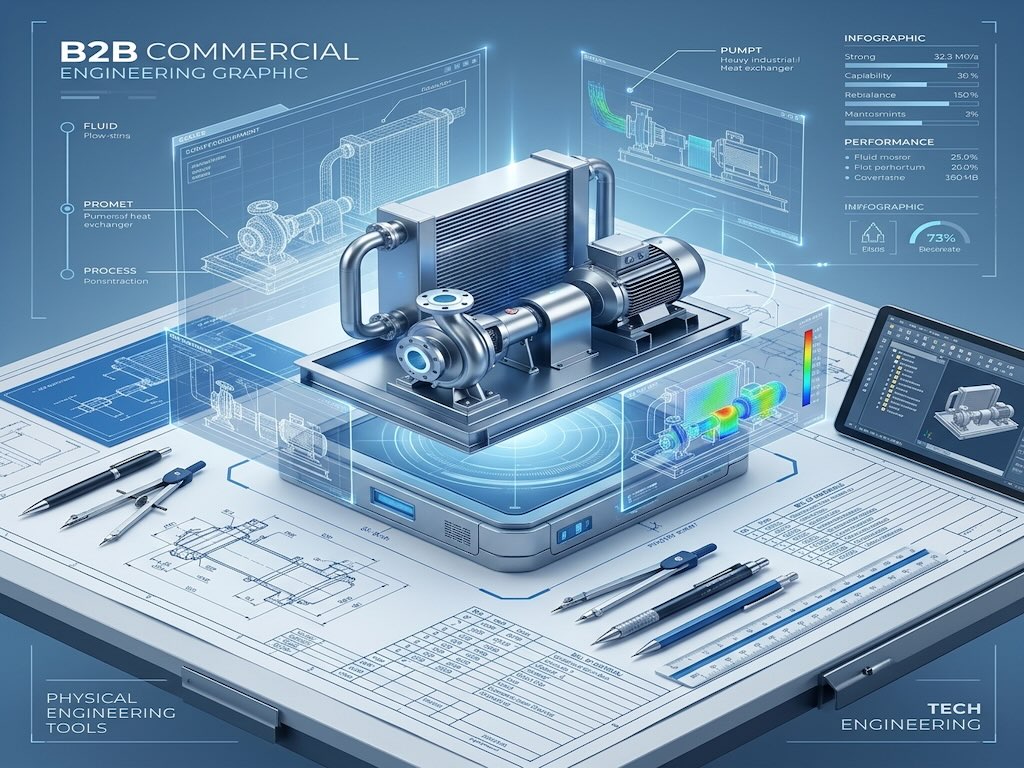
Pressure Vessel Engineering with PV Elite
Using PV Elite, we perform detailed mechanical design of pressure vessels. This includes:
- ✓ Wall Thickness Calculation: Optimizing shell and head thickness to withstand internal/external pressure while minimizing material weight and cost.
- ✓ Nozzle Reinforcement: Ensuring that every connection point is reinforced to handle piping loads without localized buckling.
- ✓ MDMT Analysis: Calculating the Minimum Design Metal Temperature to prevent brittle fracture in cold climates or cryogenic service.
Finite Element Analysis (FEA)
For complex geometries where standard code formulas fall short, we employ Finite Element Analysis (FEA) using ANSYS. This advanced data analysis technique breaks the equipment into millions of mesh elements to visualize stress distribution.
Application: We use FEA to analyze fatigue life in cyclic service vessels (like coke drums or adsorbers), identifying “hot spots” of stress concentration and redesigning the geometry to extend equipment life by decades.
2. Storage Tank Design & Analysis
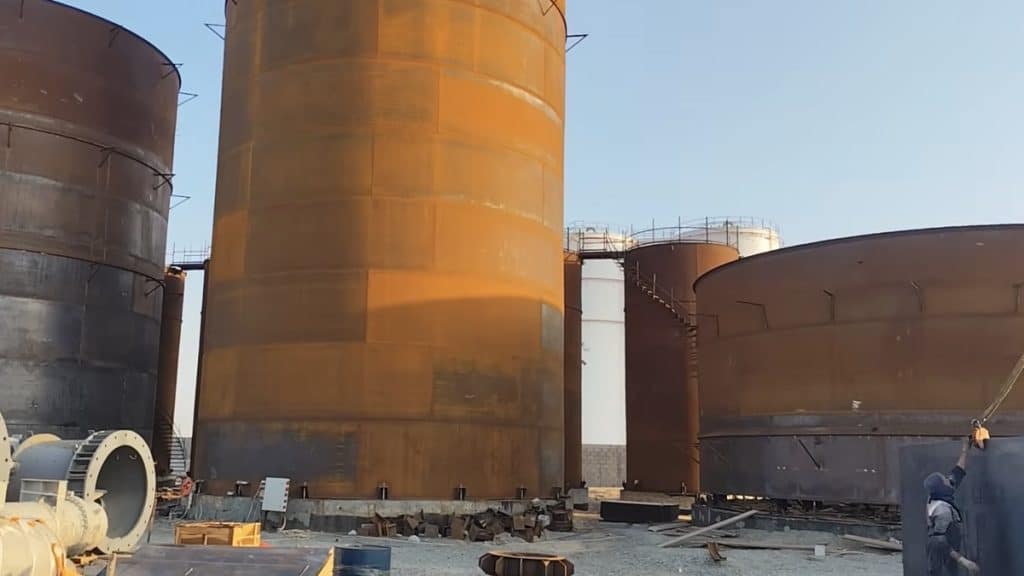
Storage tanks are deceptively complex. A failure in a large API 650 tank can lead to massive environmental disasters. Our team specializes in the complete lifecycle design, from the foundation up to the floating roof.
Our Capabilities Include:
- API 650 Design (Atmospheric)
- API 620 Low-Temp (Cryogenic)
- Seismic Analysis & Retrofitting
- Venting (API 2000)
We provide full compliance with API 650 (Atmospheric) and API 620 (Low Pressure/Cyrogenic) standards. Our analysis includes:
- Shell Stability: Checking against wind girders and vacuum buckling.
- Bottom Plate Design: Designing annular plates to handle critical moment loads from the shell.
- Foundation Load Data: Providing precise load data (dead, live, hydrotest, seismic) to civil engineers ensures no devastating settlement occurs.
3. Structural Design & Equipment Support
Equipment cannot float in mid-air. The Structural Engineering component of our service ensures that every vessel, exchanger, and skid is supported by a frame that can withstand the harshest environments.
Equipment Support Structures
We do not just look at gravity loads. Our structural analysis ensures specific attention to:
- Dynamic Loading: Analyzing vibration from compressors or pumps to prevent resonance that could fatigue the steel structure.
- Thermal Expansion: Designing sliding saddles and fixed points to allow hot equipment to expand without tearing the structure apart.
- Transport Analysis: Modeling lifting lugs and skid frames to ensure the equipment isn’t deformed during craning or shipping.
4. Equipment Foundation Engineering
The interface between the steel and the soil is critical. We deliver engineered foundation solutions that ensure long-term stability. This is particularly vital for tall columns or heavy reactors where wind shear and seismic overturning moments are massive.
Data-Driven Soil Interaction: We integrate geotechnical data into our structural models. Rather than assuming a rigid base, we model soil spring stiffness to predict differential settlement accurately. This advanced interaction analysis prevents the “leaning tower” effect common in poorly engineered tank farms.
5. Seismic & Wind Engineering
In a changing climate and geologically active world, static equipment must be ready for nature’s fury. We perform rigorous compliance checks for:
- Seismic (ASCE 7 / UBC): Using spectral response analysis to predict how a tall column or full tank will slosh and sway during an earthquake, designing anchor bolts and baffles to withstand these forces.
- Wind Load Analysis: Designing stiffening rings and insulation supports to prevent wind-induced buckling during hurricanes or typhoons.
Frequently Asked Questions (FAQ)
Q1: Why is FEA important for pressure vessel design?
A: Standard design codes (like ASME VIII-1) use conservative formulas for simple shapes. Finite Element Analysis (FEA) allows us to accurately model complex geometries (like nozzle intersections or supports) to predict stress concentrations that standard formulas might miss, ensuring safety without over-designing.
Q2: What is the difference between API 650 and API 620 tanks?
A: API 650 is for atmospheric storage tanks (pressure < 2.5 psi). API 620 is for large, low-pressure storage tanks (up to 15 psi) and is required for storing cryogenic liquids like LNG or Liquid Oxygen, demanding more rigorous analysis.
Q3: Do you provide certification?
A: We provide the full engineering design package (calculations and drawings) stamped by Professional Engineers (PE), which is required for fabrication and ASME code stamping by your manufacturer.
Q4: How do you handle seismic design for tall columns?
A: We perform a spectral response analysis to calculate the base shear and overturning moment. We then design the anchor bolts, skirt, and foundation to ensure the column remains stable and intact even during a major seismic event.
Built Safe. Built to Last.
Ensure your assets meet ASME, API, and AISC codes with our precision engineering. Risk is managed best in the design phase.
Consult Our Structural Experts