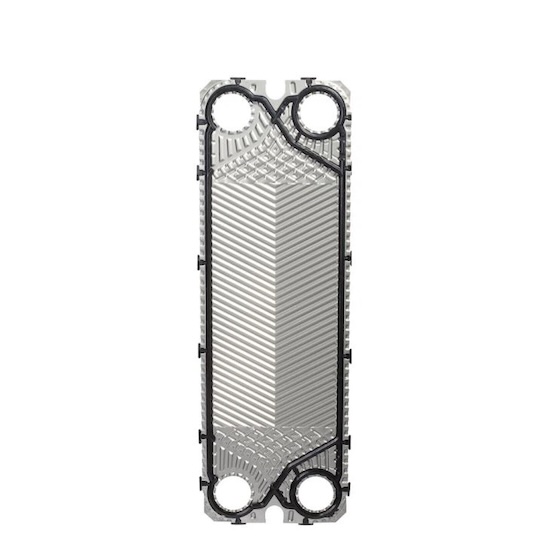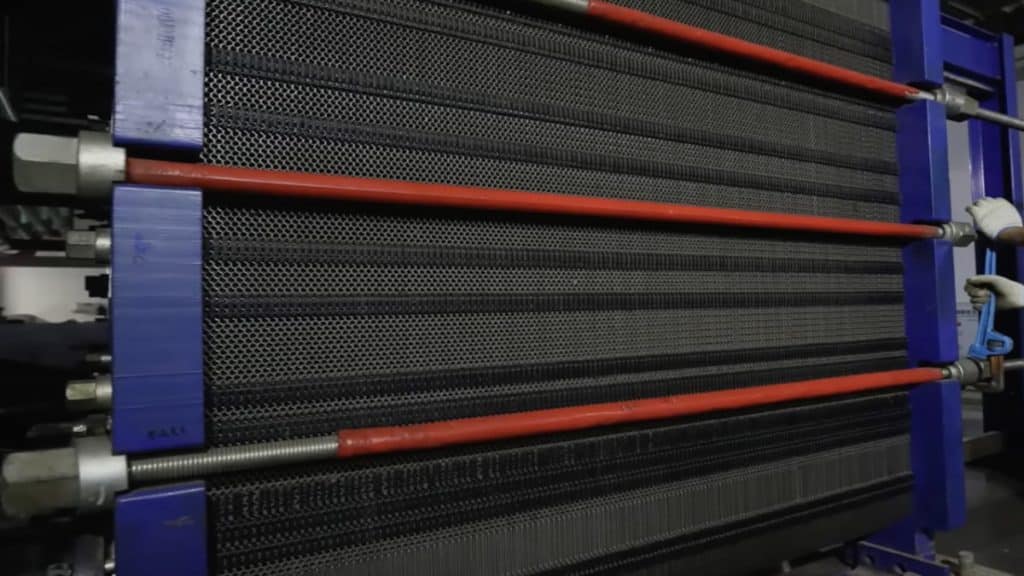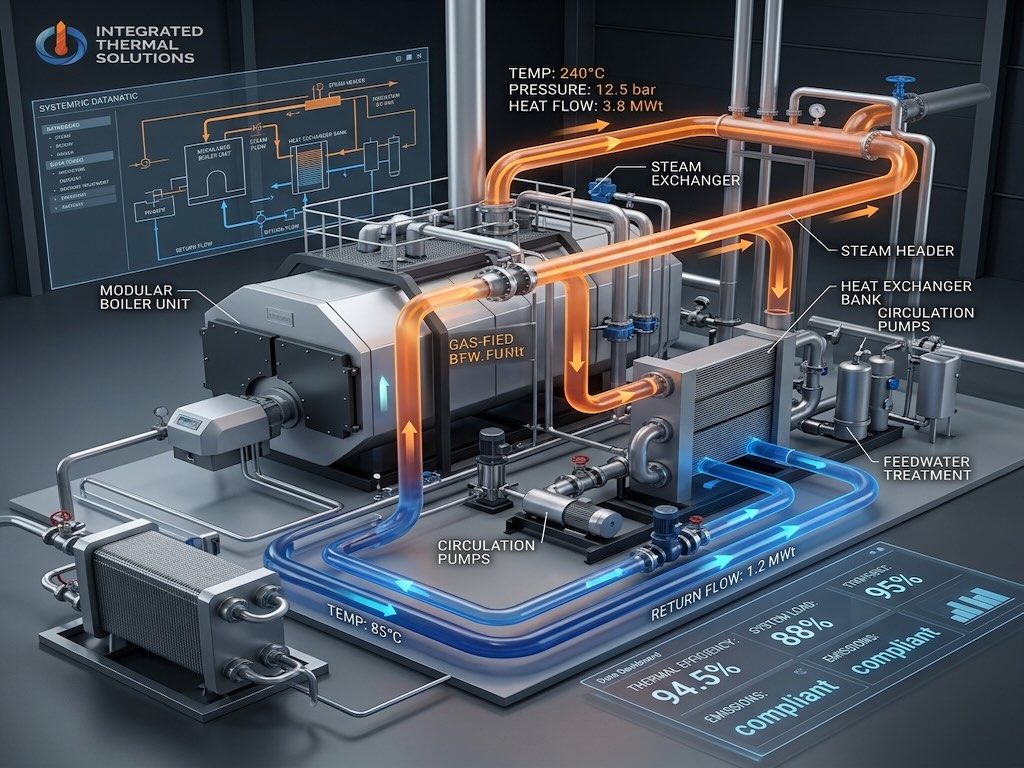

In the discipline of process engineering, “one size fits all” is a recipe for thermal inefficiency. Optimizing thermal transfer requires selecting the specific frame geometry that aligns with your hydraulic and thermodynamic constraints. While a compact FP 05 might struggle with a 500 kW load, the robust FP 22 handles it with ease—but demands a significantly larger physical footprint.
Whether you are designing for HVAC substations, industrial cooling, or power generation, understanding the nuance between these models is critical. This guide dissects the performance characteristics of the Funke FP range using real-world engineering data.
Quick Sizing Check
Before diving into the specifications, you can run a preliminary check on your requirements here:
Model Comparison: The FP Series at a Glance
The following table provides a comparative analysis of the FP series. Note the correlation between the “Efficiency Factor”—which refers to the plate’s ability to handle low LMTD (Log Mean Temperature Difference) or tight temperature approaches—and the suggested applications.
| Model | Ideal Capacity Range | Efficiency Factor* | Best Use Case |
|---|---|---|---|
| FP 05 | 25 – 300 kW | High | Domestic Hot Water, Small Oil Coolers |
| FP 09 | 100 – 600 kW | Medium | General Process, Food & Bev |
| FP 10 | 200 – 800 kW | Med-High | HVAC Substations, Steam Condensers |
| FP 14 | 500 – 1200 kW | Medium | Industrial Water/Water |
| FP 16 | 800 – 2000 kW | High | Large Chillers, Heat Recovery |
| FP 22 | 1500 kW + | Very High | District Heating, Power Gen |

Detailed Breakdown: Matching Frame to Function
Understanding the specific “personality” of each frame size allows engineers to avoid costly oversizing or dangerous undersizing. Below, we break down the operational sweet spots for each unit in the series.
Max Capacity: 400 kW | Connection: DN 50 (2″)
Small footprint, high efficiency. The FP 05 is the engineer’s choice for decentralized systems where space is at a premium. It features a plate pattern designed to induce high turbulence even at lower flow rates.
Best For: Domestic Hot Water, Small Oil Coolers, Solar Systems.
💡 Pro Tip: Excellent for low-flow, high-temperature-difference applications where turbulence needs to be maintained at lower velocities.
Max Capacity: 600 kW | Connection: DN 65 (2.5″)
The industry standard for general heating. This unit strikes a balance between thermal length and hydraulic performance, making it a “Jack of all trades” for standard industrial duties.
Best For: Process Water Cooling, Building Heating, Food & Beverage (Pasteurization).
💡 Pro Tip: Balances pressure drop and heat transfer perfectly for medium duties, often avoiding the need for larger pumps.
Max Capacity: 1000 kW | Connection: DN 100 (4″)
High flow capability for district heating. The FP 10 is frequently specified in Gasketed Plate Heat Exchanger selection for municipal projects due to its ability to handle significant volume.
Best For: HVAC Substations, Steam Condensers, Large Building Utilities.
💡 Pro Tip: Designed to handle larger flow rates without excessive pressure loss, making it ideal for pump energy optimization.
Max Capacity: 1000 kW | Connection: DN 125 (5″)
Robust design for continuous industrial use. While similar in capacity to the FP 10, the FP 14 offers a different aspect ratio, often providing a “squarer” flow path that benefits viscous fluids or high-velocity constraints.
Best For: Water/Water Interchangers, Chemical Process Cooling.
💡 Pro Tip: A “squarer” plate geometry allows for lower pressure drops at high flows compared to the narrower FP 10.
Max Capacity: 1500 kW | Connection: DN 150 (6″)
Optimized for refrigeration and cooling towers. In applications where every degree of approach temperature counts, the FP 16 shines. Its elongated thermal length ensures maximum energy recovery.
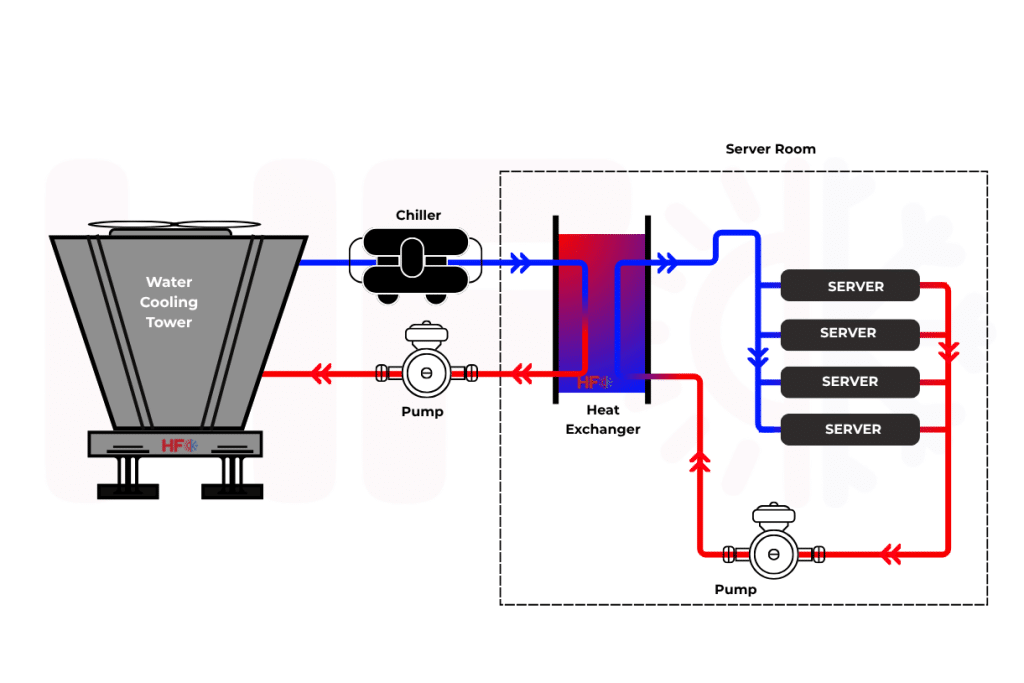
Best For: Large Chillers, Heat Recovery Systems, Data Center Cooling.
💡 Pro Tip: High LMTD efficiency makes it perfect for “Free Cooling” applications (tight approach temps).
Max Capacity: 2500 kW+ | Connection: DN 200 (8″)
Massive capacity for heavy duty. When moving megawatts of energy, the FP 22 provides the necessary surface area. This unit is a staple in heavy industry where reliability and sheer scale are required.
Best For: Power Generation, Heavy Chemical Industry, Central District Cooling.
💡 Pro Tip: Extremely sensitive to LMTD; provides massive surface area for MW-scale heat transfer.
Technical Deep Dive: The Impact of LMTD on Selection
Why choose an FP 22 over an FP 16 if the flow rates are similar? The answer often lies in the LMTD (Log Mean Temperature Difference).
The Efficiency Equation
Our analysis of the FP 22 reveals a crucial insight: it is designed for massive efficiency in tight thermal approaches. In heat transfer, the “approach” is the temperature difference between the hot fluid outlet and the cold fluid inlet.
- The Data: For the FP 22, every 1°C drop in LMTD (e.g., trying to cool from 40°C to 30°C using 29°C water vs 25°C water) increases the required surface area exponentially.
- The Takeaway: Use the FP 22 when you have very tight temperature approaches (e.g., < 2°C). Its large plate format allows for the necessary thermal length to achieve this exchange. For easier duties with wider temperature gaps, the FP 10 or FP 16 may be more cost-effective options.
Proper maintenance is also a factor in model selection. Larger units like the FP 22 utilize different gasket configurations. For detailed information on maintaining these units, refer to our guide on GPHE Spare Parts.
Need Precise Sizing? While our calculator provides excellent estimates, complex industrial applications often require a nuanced approach considering fouling factors and material compatibility. Don’t hesitate to reach out for a professional consultation.
Frequently Asked Questions (FAQ)
Q1: What is the main difference between the FP 05 and FP 22 models?
A: The primary difference lies in capacity and intended application. The FP 05 is a compact unit designed for small loads (typically up to 300 kW), such as domestic hot water systems. In contrast, the FP 22 is a massive industrial processing unit capable of handling over 2500 kW, making it suitable for district heating and power plant applications.
Q2: Which Funke FP model is best designed for HVAC substations?
A: The FP 10 is generally considered the HVAC specialist. It balances high flow rate capabilities with moderate pressure drops, making it ideal for the varying loads found in district heating substations and large building utility connections.
Q3: What does “Efficiency Factor” mean in the comparison table?
A: The Efficiency Factor refers to the plate’s ability to achieve heat transfer with a very small Log Mean Temperature Difference (LMTD). A model with a “High” efficiency factor (like the FP 16) efficiently transfers heat even when the temperature gap between the hot and cold fluids is very narrow (e.g., less than 2°C).
Q4: Can the FP 16 handle refrigeration cooling duties?
A: Yes, the FP 16 is excellent for refrigeration and chiller applications. Its elongated thermal length allows it to handle tight temperature approaches, making it highly efficient for heat recovery and “Free Cooling” circuits.
Q5: Is there a tool to help me select the right Funke model?
A: Yes. We have embedded a Quick Sizing Selection Calculator directly in this guide. It allows you to check your thermal requirements against the capabilities of the FP 05 through FP 22 series to find the best match instantly.
Conclusion
Selecting the correct heat exchanger is a balance of hydraulic limitations, thermal requirements, and physical space. The Funke FP series offers a graduated range of options, from the compact FP 05 for residential use to the industrial behemoth FP 22. By understanding the specific “personality” of each frame—whether it’s the pressure-drop friendliness of the FP 14 or the thermal precision of the FP 16—engineers can ensure long-term system efficiency.
If you require assistance with a complex duty or need to verify a selection, please contact our engineering team.