
Static Equipment Design & Analysis Engineering
In high-pressure industrial environments, system integrity is non-negotiable. Our specialized static equipment design and analysis services provide rigorous, code-compliant engineering for pressure-retaining vessels, heat exchangers, and storage solutions. We bridge the gap between initial process data and final mechanical fabrication, ensuring every piece of static equipment meets the strictest international safety and performance standards.
What is Static Equipment Design?
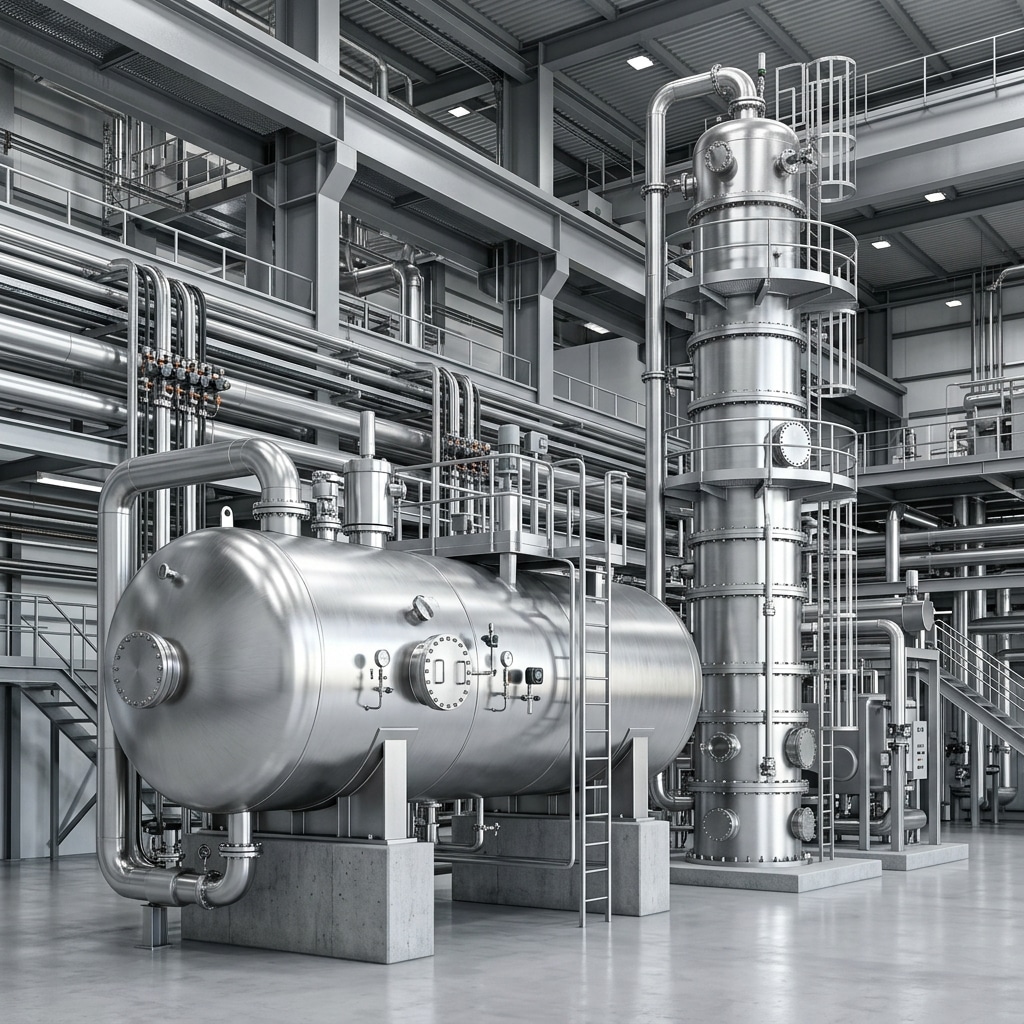
Static equipment design is the mechanical and structural engineering of non-moving industrial assets, such as pressure vessels, distillation towers, and heat exchangers. Working strictly to codes like ASME Section VIII, engineers evaluate pressure, temperature, and material stress to guarantee extreme operational safety and structural integrity.
From complex shell & tube heat exchanger calculations to determining nozzle loads on heavy LPG bullets, our engineering approach minimizes material costs while maximizing operational lifespans. We analyze thermal expansion, wind loads, seismic activity, and internal pressures across a diverse range of equipment.
Our Comprehensive Engineering Scope
We provide full-spectrum mechanical and thermal design for virtually any static asset in your facility.
- Heat Exchangers: Complete thermal and mechanical design for Shell & Tube and Plate Heat Exchangers.
- Pressure Vessels & Columns: Detailed engineering for Two/Three Phase Separators, Distillation Towers, and heavy ASME Section VIII Div 1 and 2 vessels.
- Storage Solutions: API-compliant engineering for bulk Storage Tanks, LPG Bullets, and Silos.
- Cooling & Packaging: Optimization of Air Coolers, Condensers, and custom Skid Mounted Packages.
- Mechanical Calculations: Precision analysis of local stresses, wall thickness, material selection, and nozzle loads.
Elite Software Capabilities: PV Elite, HTRI, and Beyond
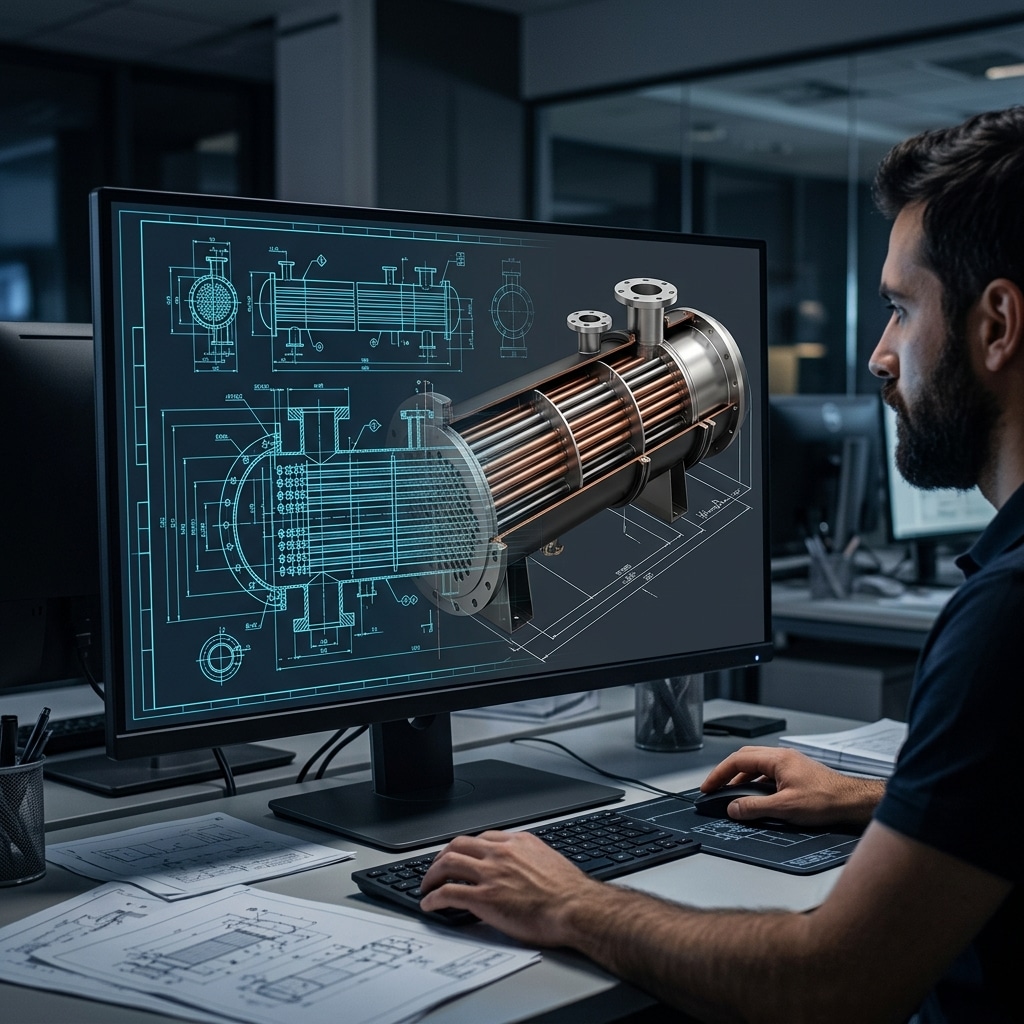
World-class static equipment design requires world-class digital tools. We utilize a powerful combination of industry-standard modeling software and proprietary systems to cross-verify every calculation.
| Software Suite | Primary Application | Engineering Value |
|---|---|---|
| PV Elite | Pressure Vessel & Heat Exchanger Design | Ensures strict compliance with ASME, API, and EN codes. |
| HTRI Xchanger Suite | Advanced Thermal Rating | Optimizes heat transfer areas, solving severe fouling issues. |
| SolidWorks | 3D Mechanical CAD Modeling | Creates precise GA drawings and clash-free fabrication graphics. |
| VDI Atlas | Fluid Dynamics & Heat Transfer | Provides elite European-standard thermal correlation data. |
| In-House Excel | Proprietary Verification | Rapid, customized calculation checks for unique mechanical loads. |
Warning: Improper nozzle load analysis is a leading cause of pressure vessel failure. Always ensure your design integrates the static vessel calculations with the adjacent piping stress analysis.
How to Execute a Code-Compliant Pressure Vessel Design
To pass rigorous third-party inspections and ensure decades of safe operation, our engineers follow a strict, systematic design process:
- Process Data Review: Analyze the provided process engineering data (temperature, pressure, fluid composition).
- Material Selection: Select the absolute best metallurgy to resist specific corrosive agents and extreme thermal states.
- Thermal Sizing (HTRI): Determine the required heat transfer area and optimal tube bundle layout.
- Mechanical Design (PV Elite): Calculate minimal wall thicknesses, head dimensions, and support structures to handle the primary loads.
- Local Stress Analysis: Evaluate localized stresses at nozzles, saddles, and lifting lugs using integrated or finite element methodology.
- Drawing Generation (SolidWorks): Produce the comprehensive General Arrangement (GA) and fabrication drawings required by manufacturers.
Frequently Asked Questions
-
What does PV Elite software do?
PV Elite software is a comprehensive structural analysis tool used by engineers to design, analyze, and evaluate pressure vessels and heat exchangers. It automatically applies complex rules from international standards like ASME Section VIII to ensure structural integrity under extreme conditions.
-
What is the difference between ASME Section VIII Div 1 and Div 2?
ASME Section VIII Div 1 relies on older, conservative design-by-rule principles, typically resulting in heavier, thicker vessels. Div 2 utilizes advanced design-by-analysis methods, requiring more complex engineering calculations but allowing for higher allowable stresses, resulting in thinner, cost-effective vessels for high-pressure applications.
-
Why is HTRI required for static equipment design?
HTRI (Heat Transfer Research, Inc.) is the industry gold standard for thermal sizing. It is required to accurately simulate fluid behaviors, predict fouling rates, and ensure a heat exchanger will actually transfer the specified amount of energy efficiently.
-
How do you calculate nozzle loads?
Nozzle loads are calculated by analyzing the thermal expansion and weight metrics of connected piping systems, typically pushed from software like CAESAR II into PV Elite. This ensures the connection points of the static vessel do not crack under external pipe strain.
Partner With Elite Static Equipment Engineers
Whether you need thermal rating for a failing shell and tube exchanger or complete mechanical design for a new distillation column, our engineering team has the software, the experience, and the codes memorized. We ensure your static equipment is designed for absolute safety, rapid fabrication, and decades of reliable service.