What Makes Tranter Heat Exchangers a Top Choice for Cost-Effective Operations?
If you’ve ever wondered how industries keep their processes running smoothly without burning through cash, heat exchangers are often the unsung heroes. Among these, Tranter heat exchangers have stood out for decades as pioneers in thermal management technology. Founded in the 1930s, Tranter revolutionized how industries manage heating and cooling by introducing innovative plate heat exchanger designs that prioritized efficiency, durability, and adaptability—traits that still define their products today.
In this comprehensive guide, we’ll explore why Tranter remains a go-to choice for businesses aiming to cut operational costs without compromising performance. From their evolution through nearly a century of innovation to their diverse product lineup and measurable benefits, you’ll discover how these systems deliver unmatched return on investment across multiple industries.
How Did Tranter Heat Exchangers Evolve Over Time?
Tranter’s journey began in the heart of Texas during the 1930s, where engineers sought better solutions for heat transfer challenges in oil refineries. The early models used simple stacked plate configurations, but the company’s commitment to innovation drove continuous improvements. Over the decades, breakthrough technologies like gasketed plate assemblies and advanced welding techniques transformed their designs from basic heat transfer devices into sophisticated thermal management systems.
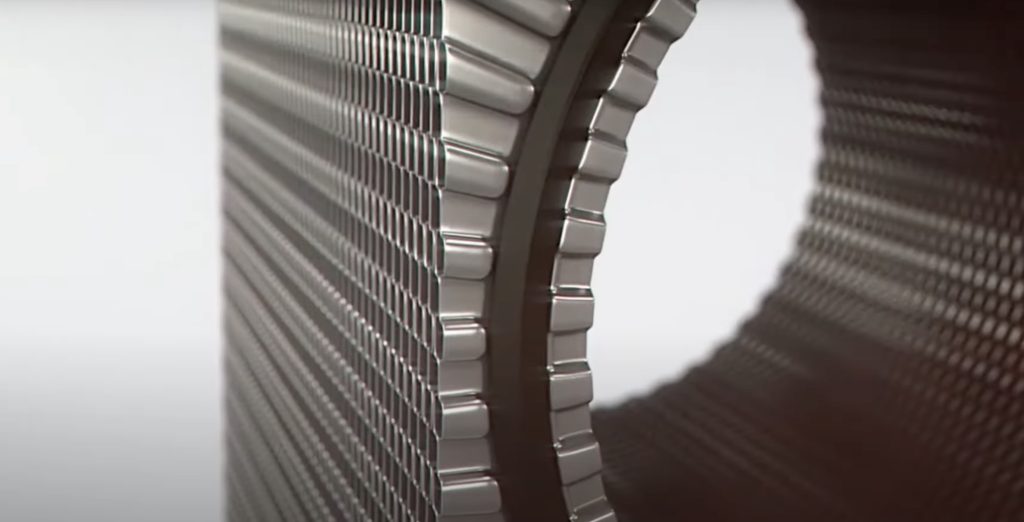
Historical Milestone: Tranter’s introduction of the chevron-patterned plate in the 1960s increased heat transfer efficiency by up to 300% compared to traditional flat-plate designs. This innovation became an industry standard that competitors still emulate today.
Today, Tranter offers an extensive range of heat exchangers engineered for demanding applications across industries including food processing, chemical manufacturing, energy production, and pharmaceutical operations. Their ability to adapt to harsh operating conditions while maintaining peak efficiency has established them as a staple in facilities worldwide, from small-scale operations to massive industrial complexes.
What Are the Different Types of Tranter Heat Exchangers?
Understanding the distinctions between Tranter’s product categories helps engineers and facility managers select the optimal solution for their specific requirements. Not all heat exchangers are built the same—each design addresses unique operational challenges and performance objectives.
1. Gasketed Plate Heat Exchangers
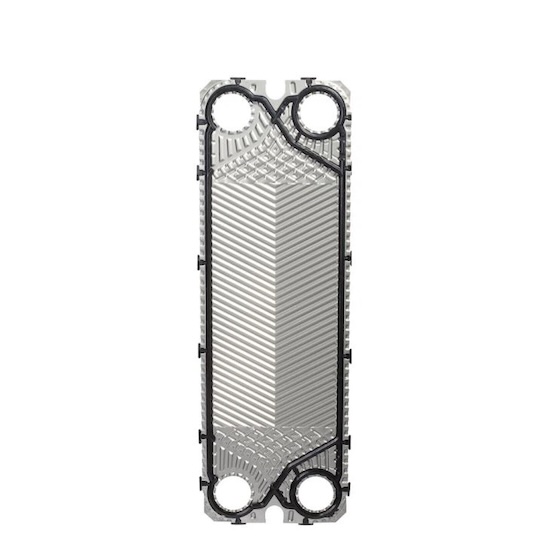
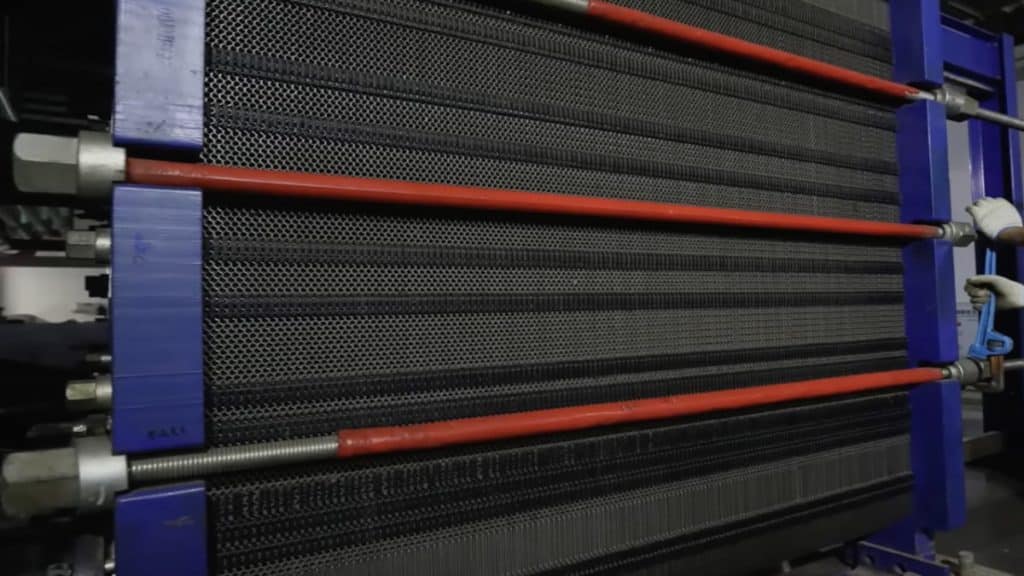
These systems use precision-engineered layered plates sealed with elastomer gaskets to transfer heat between fluids. The modular design allows for easy disassembly, making cleaning and maintenance straightforward—a critical advantage for food processing, pharmaceutical manufacturing, and other applications where hygiene standards are non-negotiable. The ability to add or remove plates provides exceptional flexibility for capacity adjustments without replacing the entire unit.
For help selecting the optimal gasketed configuration for your application, explore our comprehensive gasketed plate heat exchanger selection guide.
2. Shell and Tube Heat Exchangers
Built to withstand extreme pressure and temperature conditions, these exchangers utilize a bundle of tubes housed within a cylindrical shell. They’re the preferred choice in power generation facilities, petroleum refineries, and heavy industrial operations where reliability under severe conditions is absolutely essential. While less compact than plate designs, their robust construction ensures decades of dependable operation in the most demanding environments.
3. Welded and Brazed Plate Models
Engineered for applications involving extreme temperatures or highly corrosive fluids, these gasket-free designs eliminate potential leak points and reduce long-term maintenance requirements. The permanent bonding of plates creates a compact, high-efficiency unit ideal for chemical processing, refrigeration systems, and other specialized applications where gasket compatibility might be problematic.

Selection Consideration: While welded and brazed units offer superior durability and minimal maintenance, they cannot be disassembled for mechanical cleaning. Ensure your fluid characteristics won’t cause fouling, or plan for chemical cleaning protocols.
Tranter Heat Exchanger Models: Complete Specifications
Tranter’s extensive product lineup includes models ranging from compact residential units to massive industrial systems. Understanding the specifications of their most popular series helps engineers make informed selection decisions. Below is a comprehensive comparison of key Tranter models across their primary product families.
| Model | Series | Heat Transfer Area (m²) | Plate Dimensions (L×W mm) | Connection Size | Chevron Angle | Best Applications |
|---|---|---|---|---|---|---|
| GC Series – Gasketed Chevron (General Purpose) | ||||||
| GC-8 | GC | 0.08 | 715 × 125 | Ø30mm | 51.2°/129° | Compact residential systems |
| GC-16 | GC | 0.16 | 700 × 250 | Ø55mm | 60°/118° | Small commercial HVAC |
| GC-26 | GC/GCP | 0.26 | 941 × 384 | Ø105mm | 66°/114° | Industrial cooling, food processing |
| GC-51 | GC/GCP | 0.51 | 1352 × 505 | Ø145mm | 60°/118° | Large HVAC, process heating |
| GC-60 | GC/GCP | 0.60 | 1196 × 700 | Ø216mm | 63°/115° | High flow industrial applications |
| GX Series – High Efficiency Models (85° Chevron Angle) | ||||||
| GX-26 | GX/GXD/UFX | 0.26 | 941 × 384 | Ø105mm | 85°/115° | Chemical processing, oil & gas |
| GX-51 | GX/GXD/UFX | 0.51 | 1354 × 507 | Ø145mm | 85°/115° | Process industries, refineries |
| GX-85 | GX/GXD/UFX | 0.85 | 1528 × 942 | Ø315mm | 85°/115° | Heavy industrial, large capacity |
| GX-100 | GX/GXD/UFX | 1.00 | 1776 × 704 | Ø194mm | 85°/115° | Industrial process cooling |
| GX-145 | GX/GXD/UFX | 1.45 | 2108 × 942 | Ø315mm | 85°/115° | District heating, power plants |
| GX-205 | GX/GXD/UFX | 2.05 | 2688 × 942 | Ø315mm | 85°/115° | Large district heating, heavy industrial |
| UX Series – Ultra Compact (Space-Saving Design) | ||||||
| UX-20 | UX/UXP | 0.20 | 260 × 1100 | Ø25mm | Various | Medium residential HVAC |
| UX-40 | UX/UXP | 0.40 | 360 × 1520 | Ø32mm | Various | Commercial buildings |
| UX-81 | UX/UXP | 0.81 | 630 × 1860 | Ø50mm | Various | Large commercial applications |
Which Tranter Heat Exchanger Is Right for Your Needs?
Selecting the optimal heat exchanger configuration requires careful evaluation of multiple operational parameters. Making the wrong choice can result in poor performance, excessive energy consumption, or premature equipment failure. Consider these four critical factors during your selection process:
| Selection Factor | Key Considerations | Impact on Performance | Recommended Models |
|---|---|---|---|
| Application Type | Fluid characteristics, cleanliness requirements, hygiene standards | Determines plate pattern, gasket material, accessibility needs | Food/Pharma: Gasketed plates; Chemical: Welded units |
| Pressure & Temperature | Operating ranges, thermal cycling, pressure spikes | Affects material selection, plate thickness, connection design | High pressure: Shell & tube; Moderate: GX series |
| Maintenance Access | Cleaning frequency, fouling potential, downtime tolerance | Influences long-term operational costs and reliability | Frequent cleaning: Gasketed; Minimal fouling: Brazed |
| Space Constraints | Installation footprint, ceiling height, access requirements | Determines feasibility and installation costs | Limited space: UX series; Open area: Shell & tube |
What Are the Most Common Types of Tranter Heat Exchangers?
While Tranter manufactures specialized models for niche applications, two configurations dominate industrial installations due to their proven reliability and versatility:
Gasketed Plate Heat Exchangers: Approximately 70% of industrial thermal management systems utilize gasketed plate designs. Their flexibility, ease of maintenance, and excellent thermal performance make them the default choice for most applications. The ability to modify capacity by adding or removing plates provides unmatched adaptability as process requirements evolve.
Shell and Tube Heat Exchangers: Preferred in heavy industries like oil refining, petrochemical processing, and power generation where extreme pressures and temperatures are routine. These robust units can handle thermal shock and pressure surges that would damage plate designs, ensuring reliable operation in the harshest environments.
Need replacement components for your gasketed system? Explore our comprehensive spare parts catalog featuring genuine Tranter gaskets, plates, and accessories.
What Are the Top 7 Benefits of Tranter Heat Exchangers?
Tranter heat exchangers deliver measurable advantages that directly impact operational efficiency and profitability. These benefits extend beyond simple heat transfer to encompass total cost of ownership, environmental impact, and operational flexibility.
1. Do They Really Cut Energy Costs?
Absolutely. Tranter’s advanced plate geometries maximize effective heat transfer surface area while minimizing fluid volume, resulting in thermal transfer rates up to 300% higher than traditional shell and tube designs. This exceptional efficiency translates directly to reduced energy consumption—facilities consistently report utility cost reductions of 30-40% after upgrading to Tranter systems.
The high turbulence created by chevron-pattern plates ensures effective heat transfer even at lower temperature differentials, allowing processes to operate with reduced heating or cooling input. Over a typical 20-year equipment lifespan, these energy savings can exceed ten times the initial equipment investment.
2. How Do They Reduce Maintenance Downtime?
Gasketed plate heat exchangers can be completely disassembled for inspection and cleaning in a matter of hours—not the days or weeks required for shell and tube alternatives. Replace a worn gasket during a routine maintenance window and return to full production capacity immediately, with no specialized tools or extensive labor required.
Maintenance Efficiency Example: A typical shell and tube heat exchanger requires 2-3 days for tube bundle removal, cleaning, and reassembly. A comparable Tranter gasketed unit can be serviced in 4-6 hours, reducing maintenance-related production losses by over 80%.
3. Can They Handle Tough Environments?
Tranter’s materials engineering ensures compatibility with the most challenging process conditions. Stainless steel plates resist corrosion from organic acids and chlorides. Nickel-brazed joints withstand aggressive chemical attack. Titanium options handle seawater and other highly corrosive media. One pulp manufacturing facility reported zero leaks over five years after switching to Tranter units in their chlorine dioxide bleaching process—an application that destroyed competitive units within months.
4. Are They Space-Efficient?
The compact footprint of plate heat exchangers delivers remarkable space savings. A Tranter plate unit typically occupies just 20% of the floor space required by an equivalent-capacity shell and tube exchanger. This space efficiency proves invaluable in retrofits where installation space is limited, in urban facilities where real estate costs are high, and in process expansions where additional capacity must fit within existing infrastructure.
5. Do They Support Sustainability Goals?
Reduced energy consumption directly translates to lower carbon emissions. A facility replacing older exchangers with modern Tranter units can typically reduce its thermal management carbon footprint by 35-45%. Additionally, over 95% of materials in Tranter heat exchangers are fully recyclable at end-of-life, supporting circular economy initiatives and corporate sustainability objectives.
6. How Long Do They Last?
With appropriate maintenance and proper operation within design parameters, Tranter heat exchangers routinely deliver 20-25 years of reliable service. The modular nature of plate designs allows for component replacement rather than complete system obsolescence—extend equipment life by simply replacing worn plates or upgrading to newer gasket materials as they become available.
Longevity Case Study: One Wisconsin dairy processing facility continues operating its original 1998 Tranter installation. Regular gasket replacement and periodic plate inspection have maintained thermal performance at 94% of original specifications after more than 25 years of continuous operation.
7. Are They Cost-Effective Long-Term?
While premium Tranter systems command higher initial investment compared to commodity alternatives, the total cost of ownership calculation consistently favors quality. Energy savings alone typically recover the equipment premium within 2-3 years. Add reduced maintenance costs, minimized downtime, and extended service life, and the economic advantage becomes overwhelming.
| Cost Factor | Tranter Systems | Economy Alternatives | 10-Year Difference |
|---|---|---|---|
| Initial Investment | $50,000 | $35,000 | +$15,000 |
| Annual Energy Costs | $18,000 | $28,000 | -$100,000 |
| Maintenance (10 years) | $12,000 | $22,000 | -$10,000 |
| Downtime Costs | $8,000 | $25,000 | -$17,000 |
| Total 10-Year Cost | $250,000 | $390,000 | -$140,000 savings |
Why Choose Heating Formula for Your Tranter Heat Exchanger Needs?
At Heating Formula, we’ve maintained a strategic partnership with Tranter for over 15 years, positioning us as a trusted source for industries requiring top-tier thermal management solutions. Our technical team brings decades of combined experience in heat exchanger selection, installation, and optimization across diverse applications.
Whether you need a custom-engineered solution for a unique process challenge or routine spare parts to maintain existing equipment, our comprehensive inventory and technical expertise ensure you receive the optimal configuration—delivered promptly and supported throughout its operational life. Our industry-leading selection guide eliminates guesswork by matching your specific requirements to proven Tranter solutions.
Expert Consultation Available: Complex applications involving extreme temperatures, corrosive fluids, or critical process requirements benefit from professional engineering review. Contact our technical team for complimentary application analysis and system optimization recommendations.

Frequently Asked Questions About Tranter Heat Exchangers
1-What industries commonly use Tranter heat exchangers?
Tranter systems serve diverse industries including food and beverage processing (dairy, brewing, juice production), chemical manufacturing, pharmaceutical production, HVAC systems, energy generation (power plants, district heating), oil and gas refining, pulp and paper production, and marine applications. Their versatility and proven reliability make them suitable for virtually any thermal management application.Add Image
2-How often do Tranter heat exchanger gaskets need replacement?
Gasket replacement intervals vary based on operating conditions, but typical service life ranges from 3-5 years in standard applications. Aggressive chemicals, high temperatures, or thermal cycling can reduce this to 1-2 years, while mild conditions may extend gasket life beyond 7 years. Regular inspection during maintenance periods allows for condition-based replacement rather than fixed schedules.Add Image
3-Can Tranter heat exchangers be upgraded or expanded?
Yes, this is one of the primary advantages of gasketed plate designs. Capacity can be increased by adding more plates to the existing frame, or thermal performance can be modified by changing plate patterns. This modularity allows systems to grow with your facility without complete replacement, protecting your capital investment while accommodating process changes.Add Image
4-What’s the difference between GC and GX series Tranter models?
The GC series features standard chevron angles (51-66 degrees) suitable for general applications with balanced pressure drop and heat transfer. The GX series uses steeper 85-degree chevron angles that create higher turbulence, delivering superior heat transfer efficiency ideal for demanding process applications. GX models typically achieve 15-20% better thermal performance but with modestly higher pressure drop.Add Image
5-Are Tranter heat exchangers suitable for steam applications?
Absolutely. Tranter manufactures specialized models designed specifically for steam-to-liquid and steam-to-steam applications. These units incorporate reinforced plates, high-temperature gasket materials, and appropriate port configurations to safely handle steam pressures and temperatures while maintaining efficient heat transfer and condensate drainage.Add Image
6-How do I determine the correct size Tranter heat exchanger for my application?
Proper sizing requires analysis of several parameters including fluid flow rates, inlet and outlet temperatures, fluid properties (viscosity, specific heat, density), allowable pressure drop, and fouling factors. Our comprehensive selection guide walks through this process, or contact our engineering team for complimentary sizing calculations based on your specific requirements.
Final Thoughts: Are Tranter Heat Exchangers Worth It?
The evidence overwhelmingly supports Tranter heat exchangers as a premium choice for thermal management across virtually any industry. From dramatically slashing energy consumption and operational costs to surviving the most brutal process conditions with minimal maintenance, these systems consistently deliver exceptional return on investment.
The combination of proven reliability, superior efficiency, and long-term durability makes Tranter the intelligent choice for facilities that value total cost of ownership over initial purchase price. When you factor in reduced downtime, lower energy bills, minimal maintenance requirements, and decades of dependable service, the value proposition becomes undeniable.
Partnering with an experienced supplier like Heating Formula ensures you receive not just quality equipment, but comprehensive technical support from initial selection through decades of operational life. Our team’s deep expertise in Tranter systems guarantees optimal configuration for your specific requirements, backed by responsive support when you need it.
Ready to Upgrade? Whether you’re replacing aging equipment, expanding capacity, or designing a new facility, the right Tranter heat exchanger solution is just a click away. Explore our selection guide, review our product range, or contact our technical team for personalized recommendations.