When Should You Use 254 SMO in a Heat Exchanger?
254 SMO (UNS S31254 / EN 1.4547) is a 6% molybdenum, high-alloy austenitic stainless steel used when 316L does not provide enough resistance to pitting, crevice corrosion, or chloride stress-corrosion cracking. In heat exchangers, it can be a strong option for chloride-bearing water, chemical processing, pulp bleaching, flue-gas cleaning, and selected seawater duties—but it is not automatically the best alloy for every corrosive fluid.
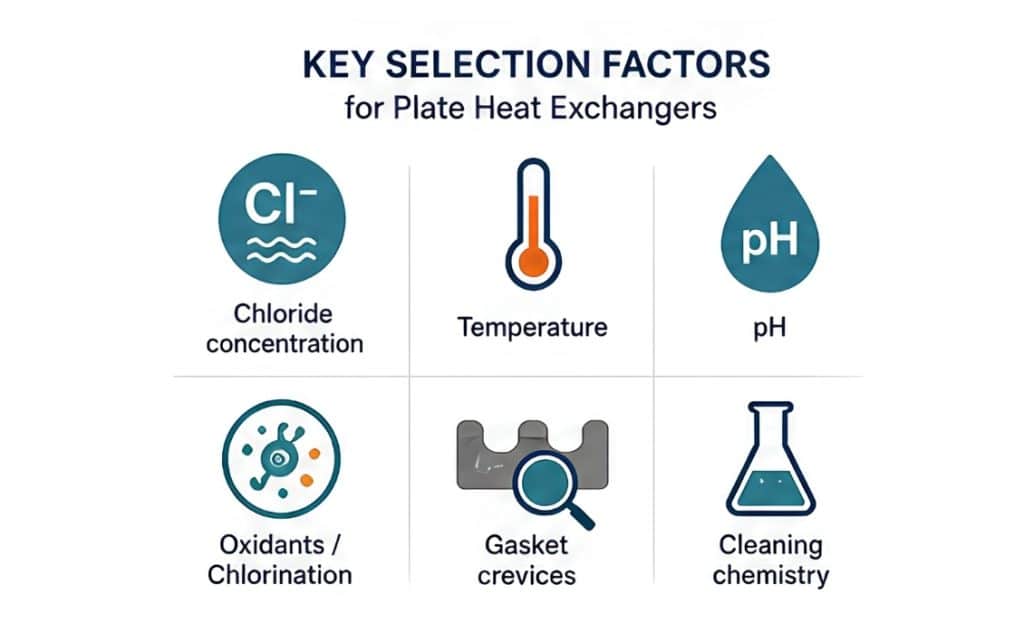
The correct plate material depends on the complete operating envelope: fluid composition, chloride concentration, pH, oxidizing conditions, maximum and minimum temperature, chlorination, deposits, cleaning chemicals, velocity, pressure, gasket geometry, and fabrication quality. If those values are not known, an alloy name alone is not a safe specification.
Engineering takeaway: Consider 254 SMO when 316L or 904L is marginal and the service conditions fit published corrosion data. Compare it with titanium, super duplex, 6XN, and nickel alloys before final selection.
What is 254 SMO?
254 SMO is a super-austenitic stainless steel developed for aggressive chloride-bearing environments. Typical nominal composition is approximately 20% chromium, 18% nickel, 6.1% molybdenum, 0.20% nitrogen, and 0.7% copper, with very low carbon.
Its alloying elements serve different purposes:
- Chromium supports the passive film and resistance to general corrosion.
- Molybdenum and nitrogen substantially improve resistance to pitting and crevice corrosion.
- Nickel stabilizes the austenitic structure and improves resistance to stress-corrosion cracking.
- Copper improves resistance in some acid environments, including selected sulfuric-acid conditions.
254 SMO combines corrosion resistance with higher strength than conventional austenitic stainless steels and can be welded successfully when the correct procedures, filler metals, heat input, cleaning, and post-fabrication practices are used.
What is the PREN of 254 SMO?
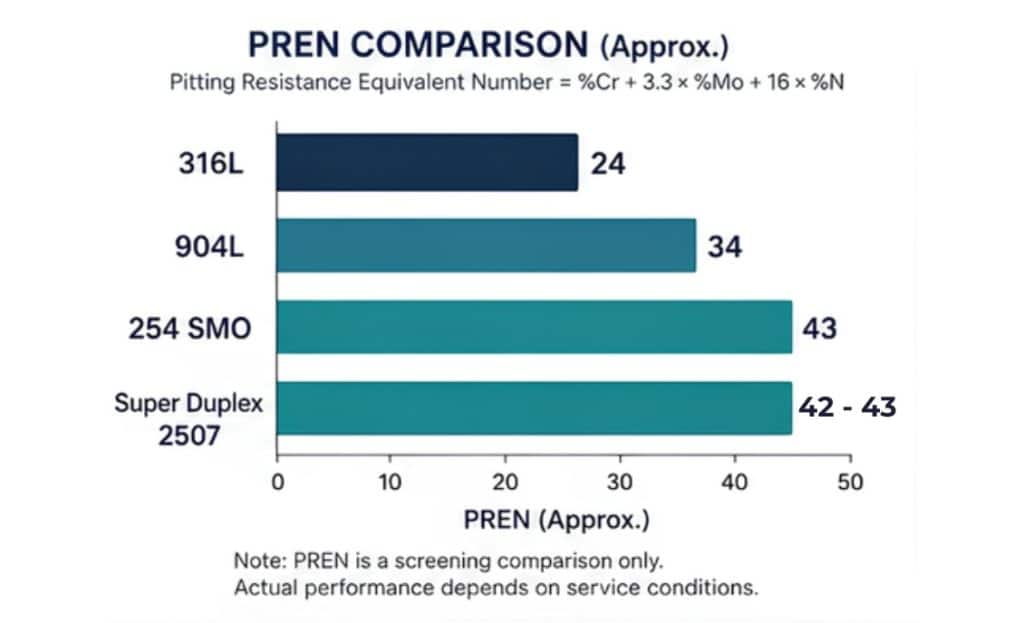
The Pitting Resistance Equivalent Number, usually written PREN or PRE, is a screening calculation used to compare the theoretical pitting resistance of stainless steels:
PREN = %Cr + 3.3 × %Mo + 16 × %N
Using typical composition values, 254 SMO has a PREN of about 43; published product data commonly specifies PRE ≥42.5. By comparison, 316L is typically around 24 and 904L around 34.
| Material | Typical PREN | Practical interpretation |
|---|---|---|
| 316L stainless steel | ~24 | General industrial water and mild process duties; limited in aggressive chloride conditions |
| 904L stainless steel | ~34 | Better general and localized corrosion resistance than 316L |
| 254 SMO / UNS S31254 | ~43 | High resistance to chloride pitting and crevice corrosion |
| Super duplex 2507 | ~43 | Similar PREN range, with a different strength, fabrication, and SCC profile |
| Titanium Grade 1 | Not comparable by PREN | Uses a different passive-film system; often preferred for seawater |
| Hastelloy C-276 | Not appropriately selected by stainless-steel PREN alone | Consider for severe mixed-acid or reducing environments where stainless steels may be unsuitable |
PREN is useful for shortlisting stainless steels, but it does not predict service life. It does not fully account for pH, temperature, chlorination, crevices, welding defects, deposits, microbiological activity, or cleaning chemistry. Final selection should rely on corrosion tables, service experience, laboratory testing when necessary, and a review by the material or heat-exchanger supplier.
Why is 254 SMO used in plate heat exchangers?
1. Resistance to pitting and crevice corrosion
Thin heat-exchanger plates cannot tolerate much localized metal loss. A small pit can become a through-wall leak and allow the two fluids to mix. The chromium, molybdenum, and nitrogen content of 254 SMO gives it much greater localized-corrosion resistance than 304 or 316L.
This matters particularly around deposits, plate contact points, gasket sealing areas, and low-flow zones. These locations can create crevices or locally concentrated chemistry even when the bulk fluid appears acceptable.
2. Improved chloride stress-corrosion cracking resistance
Heat-exchanger plates operate under forming stresses, assembly loads, pressure cycles, and thermal cycles. Conventional austenitic grades can suffer chloride stress-corrosion cracking at elevated temperatures. The nickel and molybdenum content of 254 SMO improves resistance, although no material should be described as immune under every combination of stress, temperature, and chemistry.
3. Higher mechanical strength than conventional austenitic grades
254 SMO has higher proof strength than common 300-series stainless steels. This can help the mechanical design, but it does not mean plate thickness can be reduced without manufacturer approval. Plate thickness, pressing depth, port geometry, fatigue loading, design pressure, and code requirements must be evaluated together.
4. Fabrication and weldability
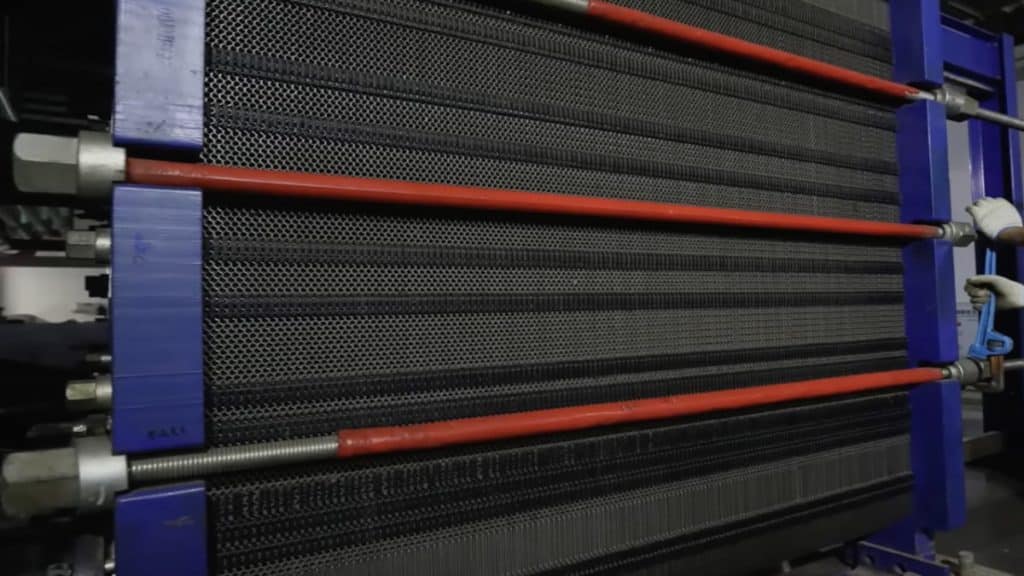
254 SMO is available in sheet and plate forms and is used in plate and tubular heat exchangers. Good results require qualified forming and welding procedures. Heat tint, iron contamination, unsuitable filler metal, or excessive heat input can reduce corrosion performance at the fabricated surface.
254 SMO vs 316L, titanium, and Hastelloy C-276
There is no universal “most corrosion-resistant” heat-exchanger material. Each alloy family performs differently depending on the fluid.
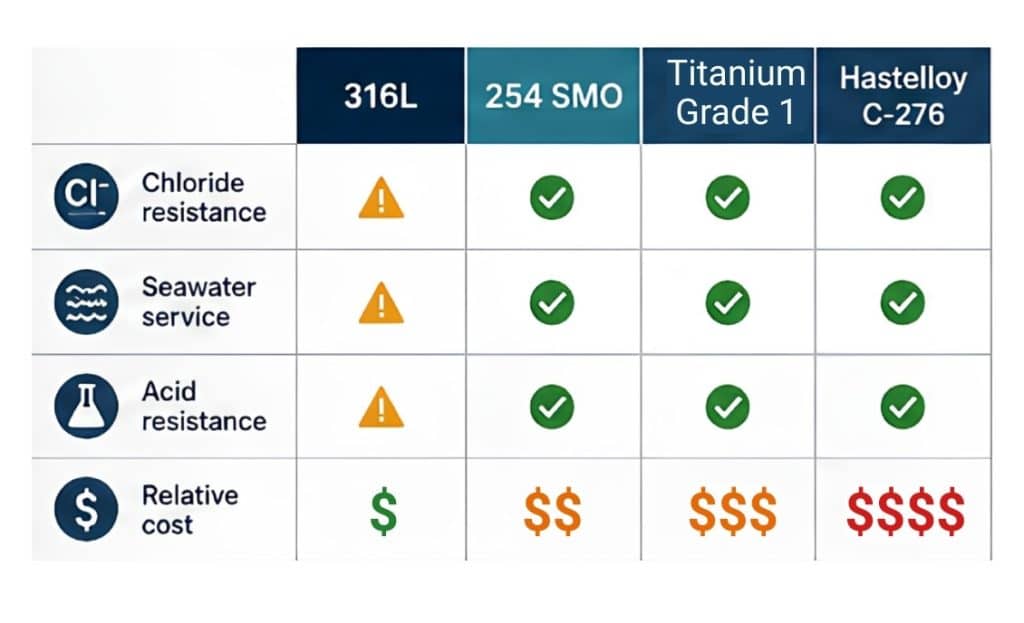
| Selection question | 316L | 254 SMO | Titanium Grade 1 | Hastelloy C-276 |
|---|---|---|---|---|
| Relative material cost | Lowest | Higher | Higher; market-dependent | Usually highest |
| Chloride pitting resistance | Limited | High | Excellent in many aerated chloride and seawater duties | Very high, but chemistry-dependent |
| Seawater | Usually unsuitable for critical warm seawater service | Possible in defined conditions; crevices and chlorination require care | Often the reference choice | Technically possible in some duties but often uneconomic |
| Reducing acids | Limited | Better in selected conditions | Can be unsuitable | Often considered for severe mixed or reducing acids |
| Plate forming and supply | Widely available | Specialist supply | Widely used for PHE plates | Specialist supply |
| Best use case | Mild water and general process service | Chloride-bearing or aggressive service beyond 316L/904L capability | Marine, desalination, brine, and oxidizing chloride service | Severe chemical service requiring a nickel alloy |
When may 254 SMO be preferable to titanium?
254 SMO can be attractive when the fluid is compatible with a super-austenitic stainless steel, stainless-steel fabrication is preferred, or the chemistry includes conditions where titanium is not the strongest candidate. Cost and availability also vary by plate model, thickness, quantity, and metal market.
When may titanium be the safer choice?
For continuously aerated seawater, warm brine, heavily chlorinated water, or duties with severe gasket crevices, titanium is often the more established option. Do not replace titanium with 254 SMO solely because the stainless steel has a high PREN. Review temperature, free chlorine, pH, biofouling, deposits, shutdown conditions, and crevice geometry first. See our guide to titanium in heat exchangers for the comparison.
When should you consider Hastelloy C-276?
Where strong reducing acids, mixed acids, contaminated chemical streams, or conditions outside the safe envelope of stainless steels are present, a nickel alloy such as C-276 may be more appropriate. Our heat-exchanger plate material comparison provides a broader starting point.
Typical applications for 254 SMO heat exchangers
254 SMO is commonly evaluated for the following duties:
- Seawater and brackish-water systems: selected cooling, desalination, and water-handling duties where the temperature, chlorination, and crevice conditions fall within the alloy’s verified envelope.
- Pulp and paper: bleaching equipment and chloride-bearing process streams.
- Chemical processing: tanks, piping, coolers, and heaters handling high-halide chemicals or selected acid mixtures.
- Flue-gas cleaning and heat recovery: wet, acidic, chloride-bearing condensates.
- Oil and gas: offshore water systems, gas cleaning, and selected sour-service conditions subject to applicable material standards.
- Desalination: selected reverse-osmosis and brine-related duties; read our guide to desalination brine heat exchangers.
These are application categories, not blanket approvals. Two streams both described as “brine” can require different materials because their pH, dissolved gases, oxidants, temperature, and concentration differ.
What information is needed before specifying 254 SMO?
Provide the following information for both sides of the heat exchanger:
- Fluid name and complete composition, including contaminants.
- Normal, minimum, and maximum inlet and outlet temperatures.
- Chloride concentration and whether it can concentrate during evaporation or shutdown.
- pH across the complete operating range.
- Free chlorine, hypochlorite, bromide, sulfide, or other oxidizing/reducing species.
- Solids, biological activity, deposit risk, and filtration level.
- Cleaning chemicals, concentration, temperature, and cleaning duration.
- Design pressure, pressure cycles, and allowable pressure drop.
- Flow rates, startup/shutdown conditions, and risk of stagnant zones.
- Required plate model, thickness, gasket compound, material certification, and applicable code.
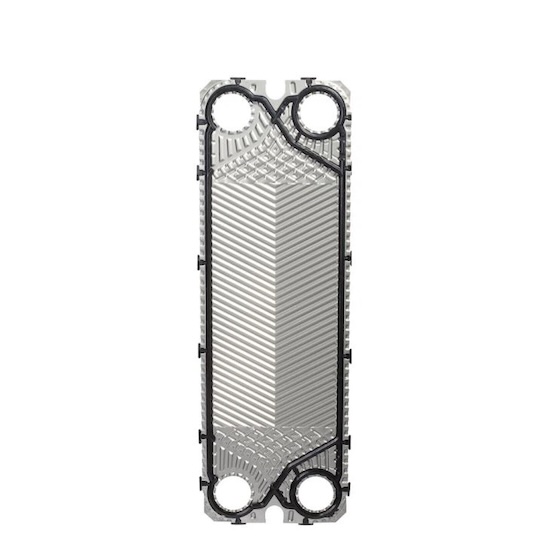
For a thermal and mechanical review, submit these values through the gasketed plate heat exchanger selection form. If you are replacing an existing plate pack, include the manufacturer, model, plate count, plate thickness, material stamp, and clear photographs.
How to improve service life after installation
Match the gasket to the fluid and temperature
The plate alloy does not protect an incompatible elastomer. EPDM, NBR, and FKM behave differently in water, oils, acids, solvents, steam, and cleaning chemicals. Use the gasket chemical-compatibility guide as an initial screen, then confirm the compound with the gasket supplier.
Control fouling and deposits
254 SMO resists corrosion; it does not prevent scale, sediment, or biological fouling. Deposits can reduce heat transfer, increase pressure drop, and create severe local chemistry underneath them. Monitor approach temperature and pressure drop, install suitable filtration, and define a cleaning trigger rather than cleaning only after performance collapses.
Use a compatible cleaning procedure
Confirm the cleaner, concentration, temperature, circulation time, and rinse procedure for the plate material and gasket. Avoid chloride-contaminated cleaning water and tools that can embed carbon-steel particles in the stainless surface.
Prevent pressure and thermal shock
Open and close valves gradually. Check the system for water hammer, flashing, two-phase instability, and rapid temperature changes. These loads can deform plates or damage gaskets even when the alloy itself is corrosion-resistant.
Inspect the plate pack methodically
During service, record leak locations, plate orientation, plate thickness, gasket condition, deposits, and any discoloration or pits. Preserve the original plate sequence during reassembly and tighten the pack to the manufacturer’s specified dimension. For replacement components, see gasketed plate heat exchanger spare parts.
Frequently asked questions
Is 254 SMO the same as 316L?
No. 254 SMO is a more highly alloyed austenitic stainless steel with about 6% molybdenum and added nitrogen. Its typical PREN is about 43, compared with about 24 for 316L, giving it much stronger resistance to chloride pitting and crevice corrosion.
Is 254 SMO suitable for seawater heat exchangers?
It can be suitable for defined seawater duties, but the answer depends on temperature, chlorination, biofilm, deposits, flow, shutdown conditions, and gasket crevices. Titanium is often preferred for demanding or continuously exposed seawater plate heat exchangers. Confirm the choice against published corrosion data and supplier experience.
Is 254 SMO better than titanium?
Neither material is universally better. 254 SMO can be attractive in selected chloride and chemical services; titanium is often stronger in aerated seawater and oxidizing chloride environments. Titanium also has important limitations, so the complete fluid chemistry must determine the choice.
Does a high PREN guarantee corrosion resistance?
No. PREN compares stainless-steel compositions, but it does not include all service variables. Temperature, pH, oxidants, crevices, deposits, welding quality, surface condition, and microbiological activity can dominate actual performance.
Can 254 SMO plates be welded?
Yes, with qualified procedures and appropriate filler metal, heat input, shielding, cleaning, and surface restoration. Poor fabrication can reduce the corrosion resistance of the finished component even when the base alloy is correctly specified.
What documents should I request with 254 SMO plates?
Request the applicable material certificate, heat number traceability, dimensional inspection, plate thickness, material designation (such as UNS S31254 / EN 1.4547), and any pressure or leak-test documentation required for the assembled exchanger.
Get a material and thermal selection review
254 SMO can extend equipment life when it matches the real process conditions. It can also be an expensive mistake when selected from chloride concentration alone.
Send Heating Formula the fluid composition, temperature program, flow rates, design pressure, allowable pressure drop, fouling information, cleaning method, and current exchanger details. Our team can compare 254 SMO with 316L, titanium, super duplex, and nickel-alloy options and prepare a suitable plate heat exchanger selection.
Request a plate heat exchanger selection