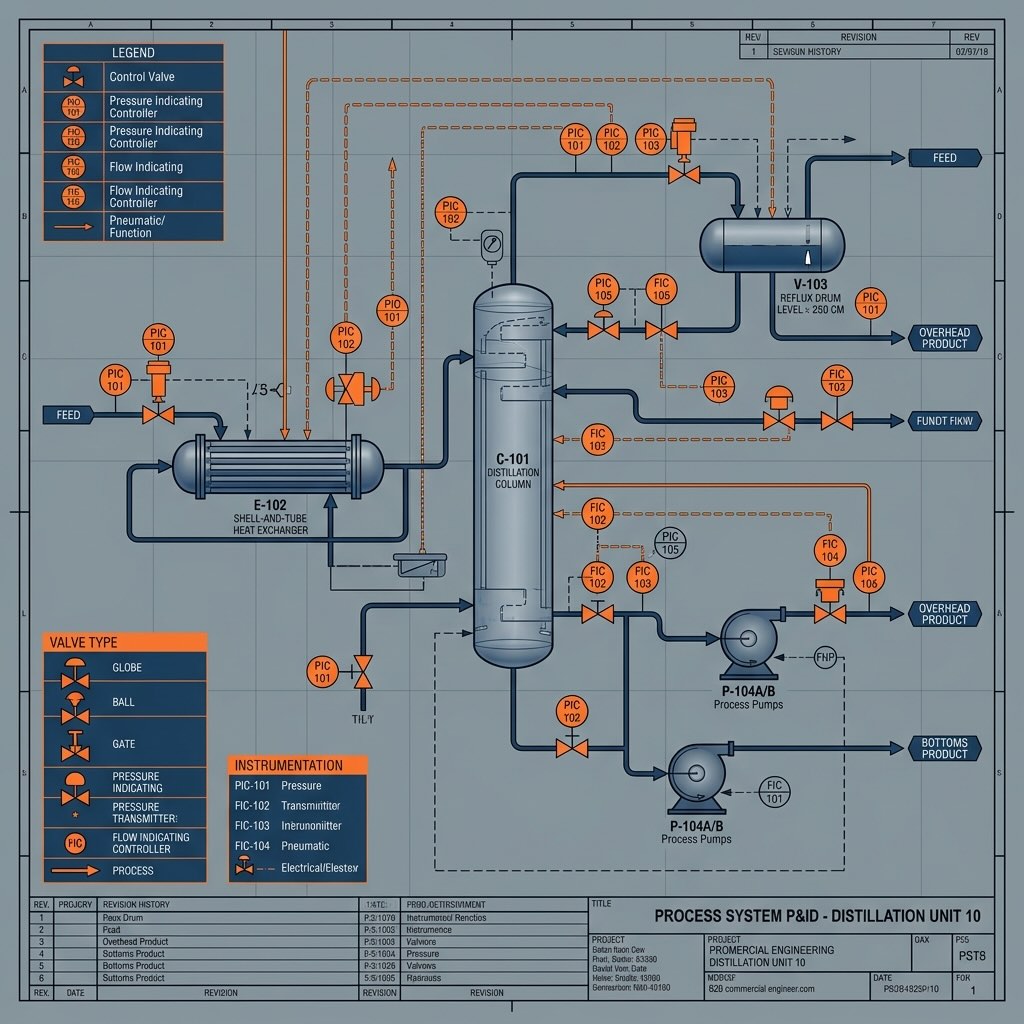

ASPEN Plus: Chemical Process Simulation & Reaction Engineering
While ASPEN HYSYS dominates the oil and gas world, a different class of industrial challenge demands equal depth: complex chemical reactions, electrolyte systems, and solid-liquid separations. ASPEN Plus is the engineering software purpose-built for exactly these scenarios. As part of our comprehensive process design and simulation services, we deploy ASPEN Plus to answer the hardest thermodynamic questions in specialty chemicals, pharmaceuticals, water treatment, and advanced refining.
What is ASPEN Plus?
ASPEN Plus (developed by AspenTech) is an advanced steady-state chemical process simulator renowned for its superior handling of chemical reactions, electrolyte chemistry, solid streams, and polymer systems. It provides an unmatched thermodynamic property database and rigorous reaction kinetic models, making it the simulation tool of choice for chemical plants, fertilizer production, mining, and pharmaceutical manufacturing.
Where ASPEN HYSYS treats the process as a collection of physical separations and heat exchange operations, ASPEN Plus goes further — modeling what happens when molecules chemically transform, when solids crystallize from solution, or when ionic species dissociate in aqueous environments. This depth is what makes it indispensable for non-hydrocarbon industries.
Core Engineering Capabilities of ASPEN Plus
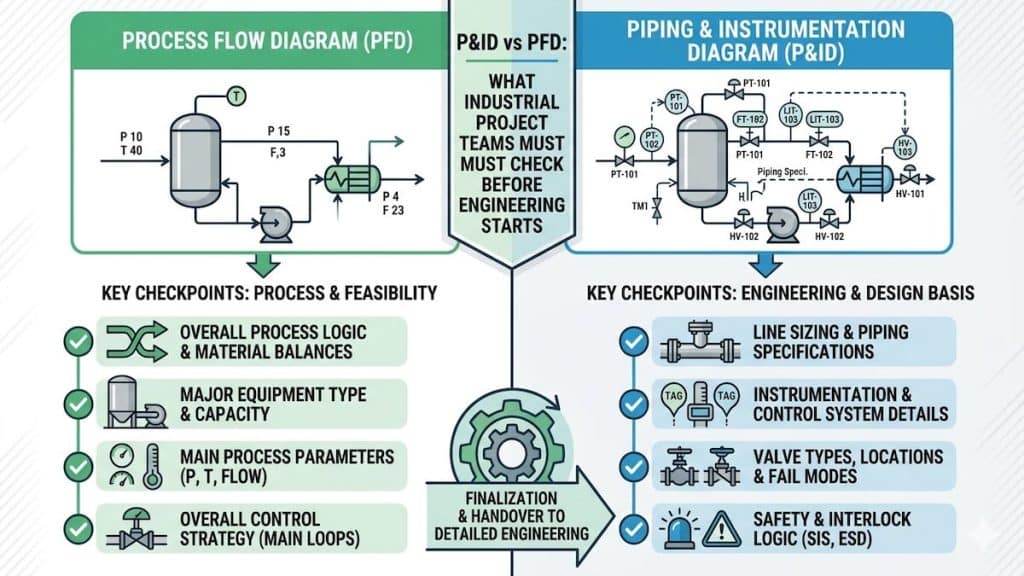
Our engineers leverage ASPEN Plus across a wide range of chemically intensive design scenarios, delivering simulation accuracy that directly feeds our PFD and Smart P&ID development.
- Reaction Engineering: Modeling stoichiometric, equilibrium, and kinetic reactors with full conversion and selectivity tracking across multi-step chemical pathways.
- Electrolyte Simulation: Accurately predicting the behavior of ionic species in aqueous systems — critical for caustic scrubbing, acid gas removal, and water treatment plants.
- Solid Handling: Modeling crystallizers, filters, dryers, and conveying systems for processes that involve solid-phase materials.
- Distillation & Absorption: Rigorous column calculations for complex reactive distillation and extractive azeotropic separation systems.
- Physical Property Estimation: Generating thermodynamic and transport properties for novel or poorly documented chemical compounds using the UNIFAC and NRTL property methods.
ASPEN Plus vs. ASPEN HYSYS: The Definitive Guide
| Engineering Criterion | ASPEN Plus | ASPEN HYSYS |
|---|---|---|
| Reaction Modeling | Full kinetic, equilibrium, stoichiometric reactors | Limited — mainly conversion reactors |
| Electrolyte Systems | Industry-leading accuracy for ionic solutions | Basic electrolyte support only |
| Solid Streams | Full solid-liquid-vapor three-phase handling | Not supported |
| Hydrocarbon Systems | Capable but less specialized | Industry-optimized for oil & gas streams |
| Dynamic Simulation | Not native (requires Aspen Dynamics) | Fully integrated dynamic module |
| Best Sectors | Chemicals, pharma, mining, fertilizers | Oil & gas, LNG, refining |
Engineering Tip: Many projects in petrochemical facilities require both tools — ASPEN HYSYS to simulate the hydrocarbon separation front-end, and ASPEN Plus to model the downstream chemical treatment or polymer reaction section. The two tools can exchange data through shared stream specifications.
How ASPEN Plus Feeds the Engineering Design Chain
A converged ASPEN Plus model is not a standalone deliverable — it is the foundation that drives all downstream disciplines. The outputs directly populate our static equipment design datasheets and our technical procurement specifications.
- Define feed compositions — including ionic species, solid fractions, and trace components often overlooked in simpler tools.
- Select thermodynamic model — NRTL, UNIFAC, Pitzer, or Electrolyte-NRTL based on the system chemistry.
- Build the reaction section — reactor models specified with rate data or equilibrium constants from laboratory testing.
- Optimize separation train — distillation columns, evaporators, and crystallizers sized for target product purity.
- Extract equipment datasheets — heat duties, flow rates, and compositions exported for mechanical equipment sizing.
- Validate with sensitivity analysis — key process variables tested across their expected operating ranges to confirm robustness.
Frequently Asked Questions
What is ASPEN Plus used for?
ASPEN Plus is used for steady-state simulation of chemical processes involving reactions, electrolytes, solid streams, and complex non-ideal mixtures. It is the standard simulation platform for fertilizer plants, pharmaceutical production, mining operations, and specialty chemical manufacturing.
What is the difference between ASPEN Plus and ASPEN HYSYS?
The key difference is industry focus: ASPEN HYSYS is optimized for hydrocarbon-based oil and gas systems with strong dynamic simulation, while ASPEN Plus excels in chemical reactions, electrolyte modeling, solid handling, and real-chemistry thermodynamics used in specialty industrial processes.
Can ASPEN Plus model solid-liquid systems?
Yes. ASPEN Plus has full solid-stream handling including crystallization, filtration, drying, and particle size distribution tracking — capabilities entirely absent in ASPEN HYSYS, making it essential for mining and mineral processing simulations.
Does ASPEN Plus include a property database?
Yes. ASPEN Plus includes one of the most comprehensive pure-component and mixture thermodynamic property databases in the industry — containing thousands of compounds. For novel compounds, its UNIFAC group-contribution methods can estimate missing properties reliably.
Simulation Precision for Complex Chemistry
If your process involves chemical reactions, ionic solutions, or solid handling, ASPEN HYSYS is simply not the right tool. Our process engineering team specializes in building accurate, well-validated ASPEN Plus models that give you full confidence in your design before capital is committed. Explore our complete process design and simulation services to learn how we approach every simulation engagement.