Overall Heat Transfer Coefficient (U-Value) Explained: Units, Formula & Calculator for Heat Exchangers
The overall heat transfer coefficient, or U-value, measures how effectively heat moves from one fluid to another through a heat exchanger wall. It combines all thermal resistances in the system: the hot-side film, fouling layers, tube or plate wall, and cold-side film. U-value is usually expressed in W/m²·K or BTU/(hr·ft²·°F). In heat exchanger sizing, it is used in the formula Q = U × A × ΔTlm, where higher U-values generally mean more heat transfer for the same area and temperature difference.
UA in heat transfer is the product of the overall heat transfer coefficient (U) and the heat transfer area (A). The U-value represents how effectively heat passes through a series of resistive layers in a heat exchanger, measured in W/m²·K (SI) or BTU/(hr·ft²·°F) (Imperial). The higher the U-value, the more efficient the heat exchanger. This single metric accounts for all thermal resistances — from the hot fluid’s convective film, through the wall material, to the cold fluid side — giving engineers a complete picture of heat exchanger performance.
In the world of industrial processing, efficiency isn’t just a buzzword—it’s the critical factor that separates profitable operations from wasteful ones. At the heart of countless thermal processes, from pasteurizing milk to cooling a skyscraper, lies the heat exchanger. But how do we measure its performance? The answer is a crucial metric known as the Overall Heat Transfer Coefficient, or U-value.

Long before the first modern heat exchanger was built, scientists like Jean-Baptiste Joseph Fourier were laying the groundwork for our understanding of thermal dynamics in the early 19th century. Their pioneering work on heat conduction paved the way for engineers to eventually quantify and optimize thermal transfer. Today, the U-value stands as a direct legacy of this history—a single number that tells us how effectively a heat exchanger is doing its job.
What Exactly is the Overall Heat Transfer Coefficient (U-Value)?
In simple terms, the U-value is a measure of how well a heat exchanger can transfer thermal energy from a hot fluid to a colder one. Think of it as the total thermal conductance of the device. The higher the U-value, the more efficient the heat exchanger is at transferring heat with a given surface area and temperature difference.
Key Definition: The U-value represents the overall thermal performance of a heat exchanger, accounting for all layers of thermal resistance from the hot fluid, through the wall material, to the cold fluid.
What is UA in Heat Transfer?
UA is the product of the overall heat transfer coefficient (U) and the heat transfer area (A). It represents the total heat transfer capacity of a heat exchanger, measured in W/K (watts per kelvin). The UA value tells you how many watts of heat the exchanger can transfer per degree of temperature difference between the fluids. The fundamental relationship is:
Q = UA × ΔTlmFor example, a heat exchanger with U = 3,000 W/m²·K and A = 10 m² has UA = 30,000 W/K. With an LMTD of 20°C, it transfers Q = 30,000 × 20 = 600 kW of heat.
What Are the Units of Overall Heat Transfer Coefficient?
| Unit System | U-Value Unit | UA Unit | Common In |
|---|---|---|---|
| SI (Metric) | W/m²·K (watts per square meter per kelvin) | W/K | Europe, Asia, international engineering |
| Imperial (US) | BTU/(hr·ft²·°F) | BTU/(hr·°F) | United States, some legacy systems |
Quick Conversion: 1 W/m²·K = 0.1761 BTU/(hr·ft²·°F). Multiply your SI U-value by 0.1761 to convert to Imperial. Use our U-value and thermal resistance calculator for instant conversions.
What is the Fundamental Formula for U-Value?
For the technically inclined, the relationship is defined by the formula:
Q = U × A × ΔTlmWhere:
- Q is the rate of heat transfer (in Watts or BTU/hr)
- U is the Overall Heat Transfer Coefficient (in W/(m²K) or BTU/(hr·ft²·°F))
- A is the total heat transfer surface area (in m² or ft²)
- ΔTlm is the Logarithmic Mean Temperature Difference (LMTD)
Example: How to Calculate U-Value
If a heat exchanger transfers 500 kW of heat, has a heat transfer area of 25 m², and operates with an LMTD of 20°C, the U-value is:
U = Q / (A × ΔTlm)
U = 500,000 / (25 × 20)
U = 1,000 W/m²·K
This means the exchanger transfers 1,000 watts of heat through each square meter of surface area for every 1°C temperature difference.
The U-value itself is calculated from the reciprocal of the total thermal resistance:
1/U = 1/h_hot + Rf,hot + t/λ + Rf,cold + 1/h_coldWhere:
- h_hot and h_cold are the convective heat transfer coefficients of the hot and cold fluids
- Rf values are the fouling resistances on each side
- t is the plate/wall thickness
- λ is the thermal conductivity of the wall material
Engineering Impact: A high U-value indicates superior performance, meaning you can achieve your desired temperature change using less surface area, resulting in a more compact and cost-effective unit.
U-Value & Thermal Resistance Calculator
What are Typical U-Values for Different Applications?
U-values vary significantly depending on the fluids involved, the type of heat exchanger, and the operating conditions. Understanding these typical ranges helps engineers select appropriate equipment and set realistic performance expectations.
| Application | Fluid Combination | Typical U-Value Range (W/m²K) | Heat Exchanger Type | Comments |
|---|---|---|---|---|
| HVAC – Water Heating | Water to Water | 800 – 1,500 | Plate (GPHE) | ✓ Excellent performance |
| HVAC – Chilled Water | Water to Glycol | 600 – 1,200 | Plate (GPHE) | Good for cooling systems |
| Pool Heating | Water to Water | 1,000 – 1,800 | Titanium Plate | Chlorine-resistant materials |
| Food Processing | Milk/Juice to Water | 500 – 1,000 | Plate (GPHE) | Viscosity affects performance |
| Oil Cooling | Oil to Water | 100 – 400 | Plate or Shell & Tube | Viscous fluids = lower U-value |
| Steam Condensation | Steam to Water | 1,500 – 3,000 | Shell & Tube | ✓ Very high performance |
| Gas to Liquid | Air/Gas to Water | 20 – 100 | Finned Tube | Low due to gas properties |
| Refrigeration | Refrigerant to Water | 400 – 900 | Brazed Plate | Compact, efficient design |
Critical Note: These are typical ranges. Actual U-values can vary by ± 30% depending on flow rates, turbulence, fouling conditions, and specific fluid properties. Always validate with calculations or manufacturer data.
Why is the U-Value So Important for Your Industry?
The U-value isn’t just an abstract number; it has tangible consequences across a wide range of industries. Optimizing this coefficient is key to improving processes, reducing costs, and ensuring product quality.
| Industry | Critical Applications | Impact of High U-Value | Consequences of Low U-Value |
|---|---|---|---|
| HVAC | Building heating/cooling, district energy | ✓ Lower energy bills ✓ Smaller equipment footprint | Higher operational costs Oversized units |
| Food & Beverage | Pasteurization, sterilization, wort cooling | ✓ Precise temperature control ✓ Product quality assurance | Process bottlenecks Product safety risks |
| Power Plants | Waste heat recovery, cooling systems | ✓ More energy recaptured ✓ Boosted plant output | Lost energy recovery opportunities Reduced efficiency |
| Automotive & Manufacturing | Hydraulic cooling, oil cooling, process cooling | ✓ Prevents overheating ✓ Extended equipment life | Increased downtime Equipment failure risk |
| Oil & Gas | Crude preheating, product cooling, refineries | ✓ Better energy integration ✓ Improved process yields | Process inefficiency Higher operating costs |
| Chemical Processing | Reactor cooling/heating, distillation | ✓ Reaction control ✓ Product consistency | Poor reaction control Quality issues |
What Factors Influence the U-Value?
The overall heat transfer coefficient isn’t a fixed constant. It’s a dynamic value influenced by several interconnected factors. Understanding these variables helps engineers optimize performance and troubleshoot issues.
How Do Fluid Properties Affect U-Value?
| Fluid Property | Impact on U-Value | Why It Matters | Example |
|---|---|---|---|
| Thermal Conductivity (λ) | Direct relationship | Higher λ → better heat transfer | Water (0.6 W/mK) vs Oil (0.15 W/mK) |
| Viscosity (μ) | Inverse relationship | Higher μ → thicker boundary layer → lower U | Light oil vs Heavy oil |
| Density (ρ) | Affects Reynolds number | Influences turbulence and flow regime | Water vs Glycol solutions |
| Specific Heat (Cp) | Affects heat capacity | Higher Cp → more heat transferred per °C | Water (4.18 kJ/kgK) is excellent |
How Does Flow Rate and Turbulence Impact Performance?
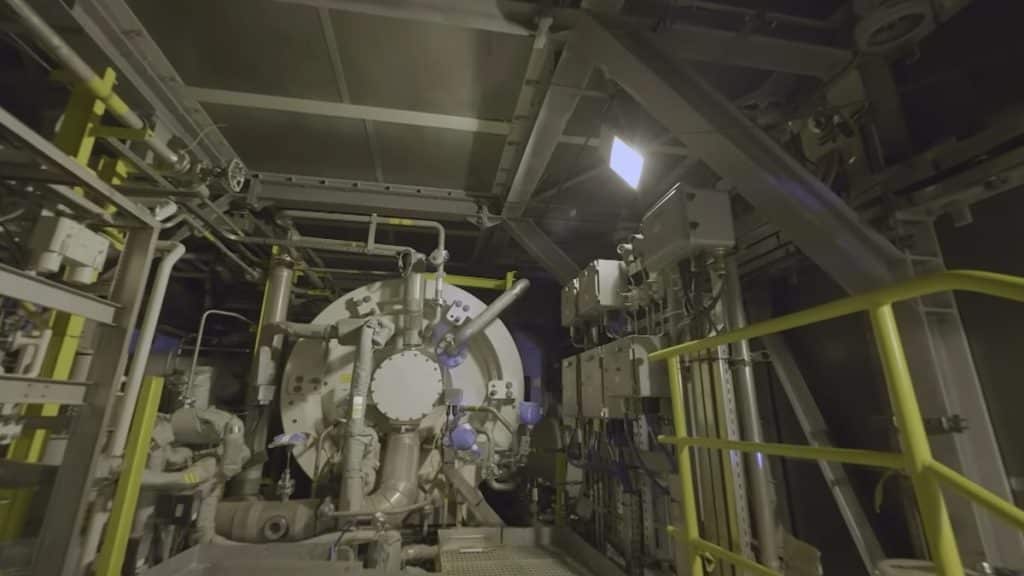
As the flow rate of the fluids increases, so does the turbulence. In a Gasketed Plate Heat Exchanger (GPHE), the corrugated plates are specifically designed to induce high turbulence even at low flow rates. This turbulence breaks up the thermal boundary layer, dramatically increasing the U-value.
U-Value Improvement from Turbulence: 200% – 400%
(Compared to laminar flow)
Why Plate Heat Exchangers Excel: The herringbone corrugation pattern in GPHEs creates turbulent flow at Reynolds numbers as low as 400, whereas shell-and-tube exchangers typically require Re > 2,000 for turbulent flow. This is why plate heat exchangers can achieve U-values 3–5 times higher than traditional designs.
Which Plate Materials Offer the Best Thermal Performance?
| Material | Thermal Conductivity (W/mK) | Impact on U-Value | Typical Applications | Cost Factor |
|---|---|---|---|---|
| Copper | 385 | ✓ Highest | Refrigeration (brazed units) | Moderate |
| 316 Stainless Steel | 16 | Good (standard) | Food, HVAC, general industrial | ✓ Low |
| 304 Stainless Steel | 16 | Good (standard) | Low chloride water applications | ✓ Very Low |
| Titanium | 22 | Slightly better than SS | Seawater, brine, high chloride | High |
| Hastelloy C-276 | 10 | Lower than SS | Strong acids, chemical processes | Very High |
| 254 SMO | 13 | Moderate | Aggressive chemicals, oil & gas | Very High |
Material Selection Priority: While thermal conductivity matters, the primary consideration is corrosion resistance and compatibility with the process fluids. A copper exchanger might have higher thermal conductivity than stainless steel, but it will fail rapidly in corrosive environments. Choose material first for compatibility, then optimize geometry for U-value. Read our detailed comparison: AISI 304 vs 316 Stainless Steel Guide.
What is Fouling and How Does it Destroy U-Value?
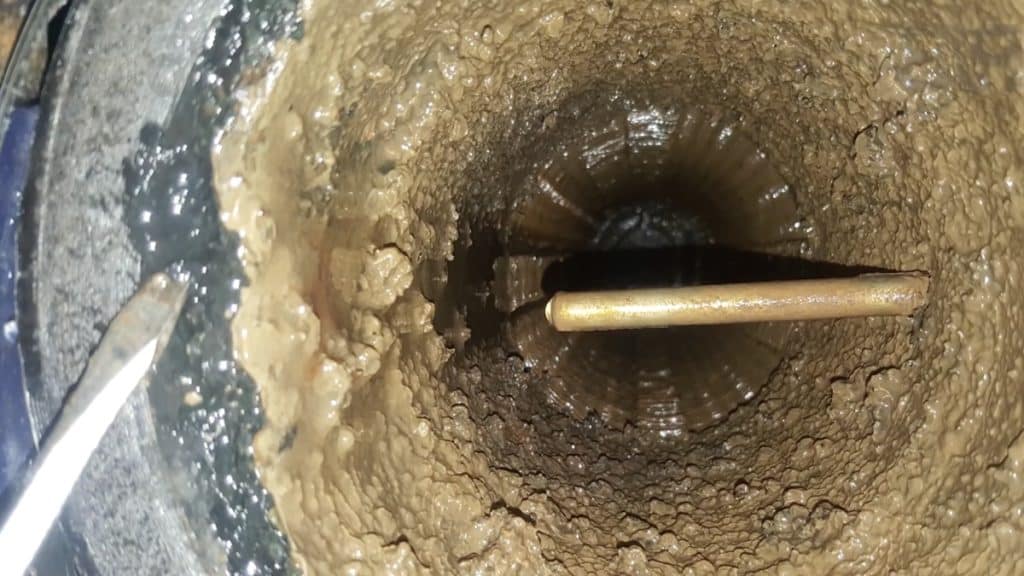
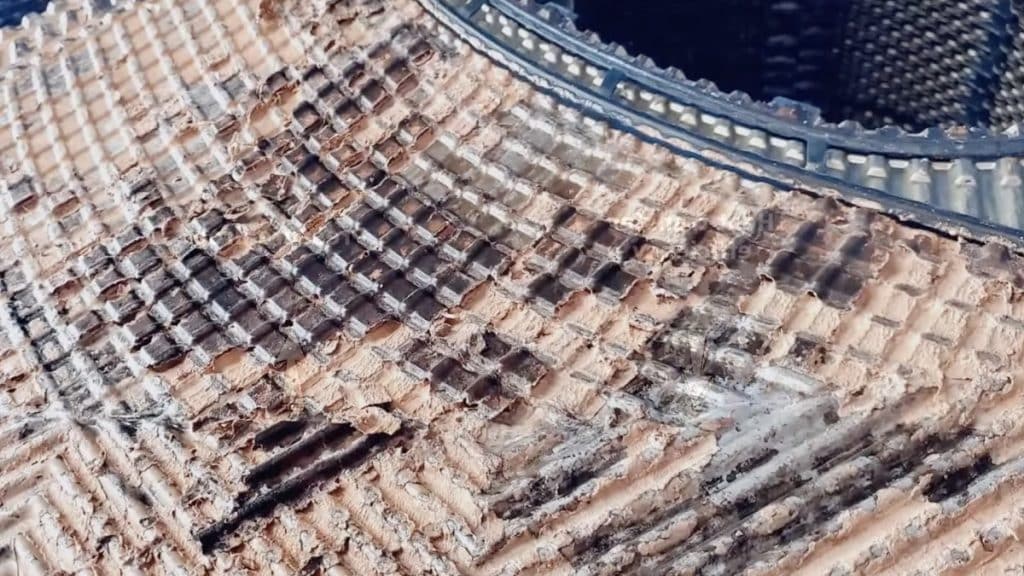
Fouling is the arch-nemesis of thermal efficiency. Over time, deposits like scale, sediment, biofilms, or chemical residues can build up on the heat transfer surfaces. This “fouling layer” acts as an insulator, creating a thermal barrier that can drastically reduce the U-value and cripple performance.
| Fouling Type | Common Causes | Typical Industries | Impact on U-Value | Prevention/Mitigation |
|---|---|---|---|---|
| Scaling | Hard water, mineral precipitation | HVAC, cooling towers | ✗ −30% to −60% | Water treatment, regular cleaning |
| Biological Fouling | Algae, bacteria, biofilm | Cooling water, food processing | ✗ −20% to −50% | Biocides, UV treatment, CIP |
| Particulate | Sediment, rust, debris | Industrial processes | ✗ −15% to −40% | Filtration, strainers |
| Chemical | Polymerization, crystallization | Chemical processing, oil refining | ✗ −25% to −70% | Process control, regular maintenance |
| Corrosion Fouling | Oxidation, corrosion products | Seawater, aggressive fluids | ✗ −20% to −50% | Proper material selection |
Fouling Factor Reality: A clean heat exchanger might have a U-value of 1,200 W/m²K. After just 6 months of operation without cleaning, fouling can reduce this to 600–800 W/m²K—cutting efficiency by 33–50%. This is why regular maintenance isn’t optional; it’s essential for economic operation. Learn more about the interplay of design pressure, pressure drop and fouling factor.
How Can You Maximize the U-Value of Your Heat Exchanger?
Ensuring your heat exchanger operates at its peak potential involves a combination of smart design choices and proactive maintenance.
What Design Decisions Optimize U-Value?
- ✓ Proper Sizing: Select a heat exchanger that is properly sized for your specific duty. Using an online calculator helps you input parameters like fluid types, temperatures, and flow rates to find the optimal design. See our step-by-step sizing guide.
- ✓ Plate Pattern Selection: Choose chevron angles that balance turbulence (high U-value) with acceptable pressure drop for your pumping system. Keep port pressure drop under 33% of total.
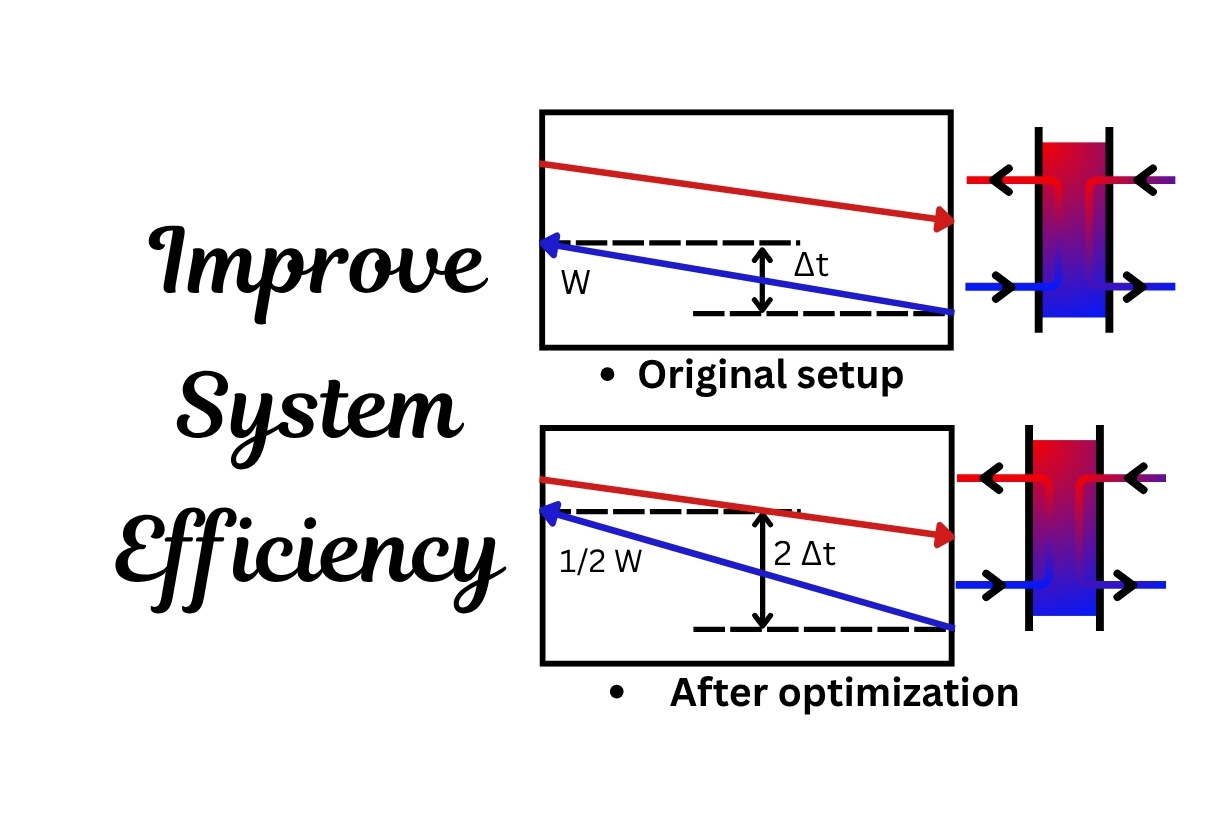
- ✓ Flow Configuration: Counter-current flow typically provides 10–15% higher U-values than parallel flow arrangements.
- ✓ Material Selection: While stainless steel is standard, consider titanium for high-chloride applications or specialized alloys for aggressive chemicals.
What Maintenance Practices Preserve High U-Values?
- ✓ Regular Cleaning Schedule: As fouling is the primary enemy of high U-value, consistent cleaning is essential—whether mechanical or clean-in-place (CIP) procedures.
- ✓ Performance Monitoring: Track outlet temperatures and pressure drop. A gradual decline indicates fouling buildup before it becomes critical.
- ✓ Quality Spare Parts: Worn plates or failing gaskets lead to internal leaks and reduced efficiency. Use high-quality OEM-compatible replacement parts.
- ✓ Water Treatment: For cooling water applications, proper chemical treatment prevents scaling and biological growth.
Heating Formula: Your Partner in Thermal Efficiency
At Heating Formula, we understand that achieving a high U-value is central to your success. As a leading heat exchanger manufacturer in Turkey, we specialize in creating thermally efficient solutions for the world’s most demanding industries.
We supply a wide variety of Gasketed Plate Heat Exchangers (GPHEs) and Shell & Tube exchangers designed for maximum performance. Furthermore, we provide a comprehensive inventory of spare parts, including plates made from 316/304 SS, Titanium, C-276 Hastelloy, and 254 SMO, as well as durable EPDM, NBR, and Viton gaskets.
Heating Formula Advantage: Our parts are engineered to be fully compatible with leading OEM brands like Alfa Laval, Sondex, APV SPX, Funke, Schmidt, Vicarb, Gea, and Tranter, offering you a reliable and cost-effective alternative without compromising on quality or performance.
Ready to optimize your thermal processes? Explore our GPHE Selection page or contact our engineering team today.
Frequently Asked Questions (FAQ)
1-What is UA in heat transfer?
A: UA is the product of the overall heat transfer coefficient (U) and the heat transfer area (A). It represents the total heat transfer capacity of a heat exchanger, measured in W/K. The heat transfer rate is calculated as Q = UA × LMTD. A higher UA value means the heat exchanger can transfer more heat for a given temperature difference between the fluids.
2-What is U in heat transfer?
A: U is the overall heat transfer coefficient, which measures how effectively heat transfers through all resistive layers in a heat exchanger — including the hot-side convective film, fouling layers, the plate/tube wall, and the cold-side convective film. It is measured in W/m²·K (SI) or BTU/(hr·ft²·°F) (Imperial). Typical values range from 20 W/m²·K (gas-to-gas) to 5,000 W/m²·K (water-to-water in plate heat exchangers).
3-What are the units of overall heat transfer coefficient?
A: In the SI system, the unit is W/m²·K (watts per square meter per kelvin). In the Imperial system, it is BTU/(hr·ft²·°F). To convert: multiply W/m²·K by 0.1761 to get BTU/(hr·ft²·°F). Typical U-values for plate heat exchangers handling water range from 1,000 to 4,000 W/m²·K.
4-What is a good U-value for a heat exchanger?
A: There is no single “good” U-value, as it depends entirely on the application, the fluids involved, and the type of heat exchanger. For example, a water-to-water application in a plate heat exchanger might have a U-value between 800–1500 W/m²K, while an oil-to-oil application might be in the 100–400 range. The goal is to maximize the U-value for your specific conditions.
5-How does fouling affect the U-value?
A: Fouling adds a layer of material with low thermal conductivity to the heat transfer surfaces. This layer acts as an insulator, increasing the overall thermal resistance and significantly lowering the U-value. This leads to reduced performance, forcing you to either increase pumping power or accept lower efficiency.
6-Can I improve the U-value of my existing heat exchanger?
A: Yes. The most effective way is through regular and thorough cleaning to remove any fouling. Additionally, ensuring your system is operating at the designed flow rates can help. If parts are worn, replacing them with high-quality spares can restore performance. For a significant improvement, you may need to re-evaluate the design with our Heat Exchanger Calculator.
7-Which plate material is best for a high U-value?
A: While the plate material’s thermal conductivity is a factor, the primary consideration is its compatibility with the process fluids to prevent corrosion and fouling. Stainless steel provides an excellent balance of good thermal conductivity and durability for many applications. For highly corrosive fluids like seawater or acids, Titanium is often the superior choice despite having slightly lower thermal conductivity.
8-Why do plate heat exchangers often have higher U-values than shell and tube exchangers?
A: Gasketed Plate Heat Exchangers (GPHEs) use corrugated plates that create a highly turbulent, narrow flow path. This turbulence dramatically enhances the heat transfer coefficient compared to the smoother flow typically found in shell-and-tube units. This often makes GPHEs a more compact and efficient solution for liquid-to-liquid duties.
9-What is the typical U-value for a plate heat exchanger?
A: Typical U-values for gasketed plate heat exchangers depend on the fluid combination: water-to-water is 1,000–4,000 W/m²·K, water-to-glycol is 600–2,500 W/m²·K, steam-to-water is 1,500–3,500 W/m²·K, and oil-to-water is 200–800 W/m²·K. These values are 2–5 times higher than equivalent shell & tube heat exchangers due to the turbulent flow created by corrugated plates.
Request a spare parts quote
List your heat exchanger models and required components — we’ll come back with pricing and lead times.
Select Brand
What Do You Need?
Select the type of spare parts required.
 Plates Only
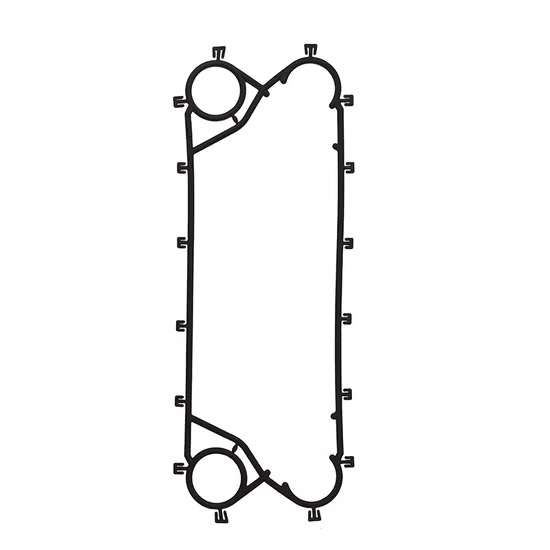 Gaskets Only
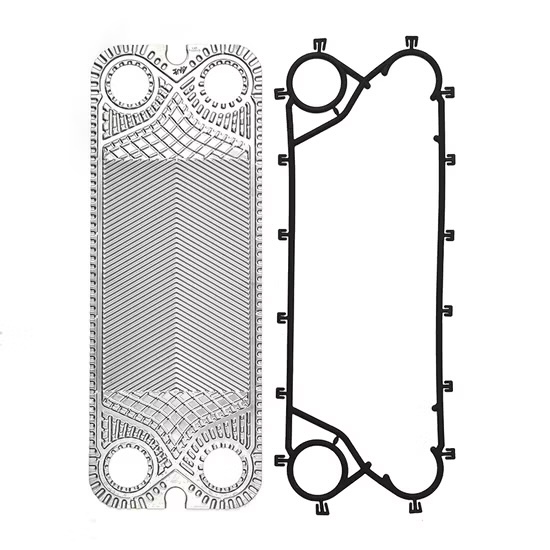 Plates & Gaskets
Specifications
Enter quantities and select material.
Plates
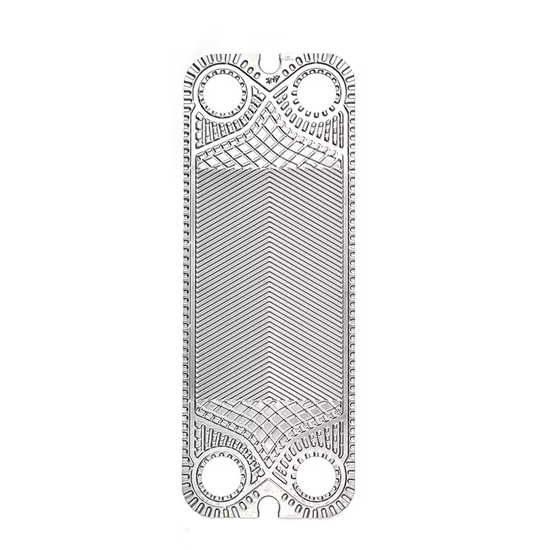 Flow Plate
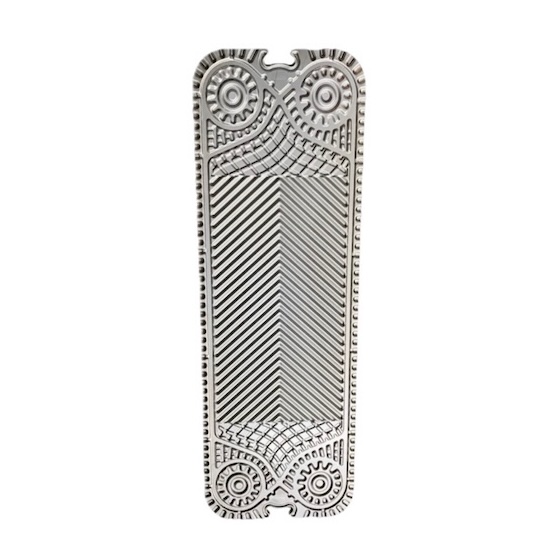 End Plate
Plate Material
Gaskets
Flow Gasket
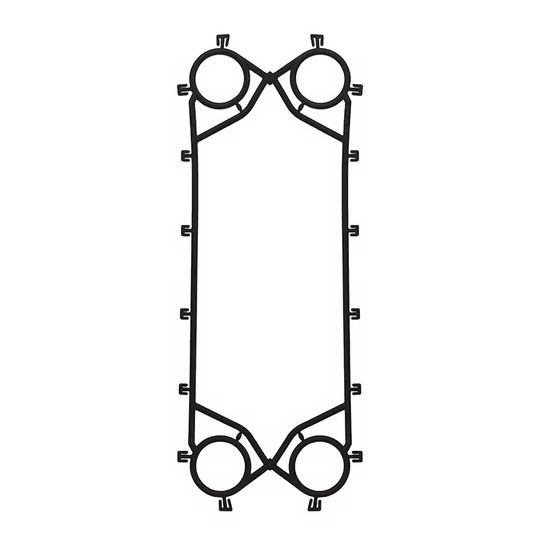 End Gasket
Gasket Material
Your Details
We'll contact you with a quotation. Fields marked * are required.
Review Your Selection ▼
Inquiry Sent!
Thank you. We will review your inquiry and get back to you shortly.
Sources
- TYPICAL OVERALL HEAT TRANSFER COEFFICIENTS (U – VALUES), Engineering Page, https://www.engineeringpage.com/technology/thermal/transfer.html
- Heat exchanger applications: types, industries & how they work, Tranter, Hisaka
- Troubleshooting for plate heat exchangers, Alfa Laval
- Fourier, J. B. J. (1822). Théorie analytique de la chaleur. Paris: Firmin Didot.
For additional technical information on heat transfer and thermal engineering, visit the Heat Transfer Coefficient Wikipedia page.